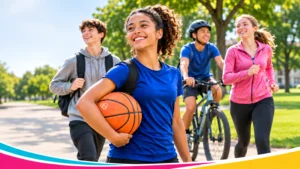

According to the Center for Disease Control (CDC), regular physical activity can help children and adolescents improve cardiorespiratory fitness, build strong bones and muscles, control weight, reduce symptoms of anxiety and depression, and reduce the risk of developing health conditions such as:
- Heart disease
- Cancer
- Type 2 diabetes
- High blood pressure
- Osteoporosis
- Obesity
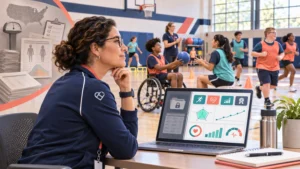
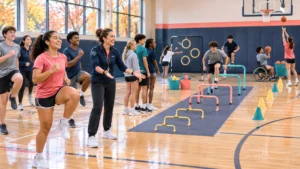
QPE must be inclusive, flexible, Interactive, with quality lessons that motivate all children to push their boundaries regardless of their physical capacity, background, religion, and gender.
QPE must have Qualified Physical Education Teachers that teach knowledge and train habits, connecting with students to explain:
- What they are learning
- Why they are learning it
- How they can self-assess so they know they have learned it
Quality Physical Education must be a priority for all schools systems both private and public. Funding should no longer be a factor because of the low cost of resources.
PhysednHealth was designed by Qualified Physical Education Teachers to be inclusive, interactive, flexible, and motivate all students. It is the lowest cost and most effective product of its kind.
https://youtu.be/ksTmloQnSqo
How are you implementing QPE at your school?
Leave us a comment. Help us help others.