
Why PE Teachers Sometimes Think Non-Physical Instruction Steals Class Time
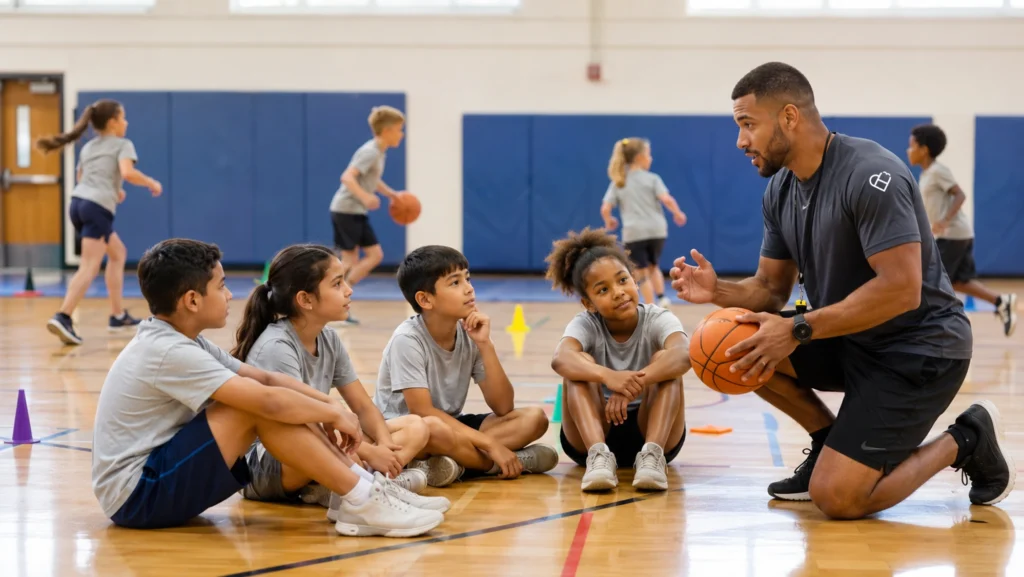
Physical education teachers often feel pressure to keep students moving as much as possible. Because PE is such an activity-driven subject, anything that slows the pace can seem like wasted time. But the science suggests a more balanced view: in PE, the goal is not just to maximize movement, but to maximize learning, engagement, and long-term physical literacy (ncbi). Why this belief is so common PE teachers work within a narrow time window, and that creates a strong instinct to protect every minute. If students are sitting, listening, reflecting, or transitioning, it can feel like the class is losing momentum. In a subject where activity is visible, it is easy to assume that only constant movement counts as real instruction (news.ku). That belief is reinforced by how PE is often perceived. A class full of active students looks productive, while a class with brief pauses for explanation or feedback may look less efficient. Over time, that can create a culture where teachers equate motion with quality, even when the most effective lesson design includes both movement and short instructional pauses. What the research says The evidence does support movement as an important part of learning. Physical activity has been linked to better attention, memory, and readiness to learn, which is one reason PE is so valuable in the school day. That means PE teachers are right to care deeply about active time. But the research also shows that learning is not just about being busy. Students need clear cues, demonstrations, feedback, and opportunities to reflect on what they are doing. In PE, teacher behavior strongly shapes student experience, and instructional quality influences how students understand the purpose of the class and how they carry those habits forward. A few minutes of well-designed instruction can improve the quality of the entire lesson. Why non-physical time can help Not all learning in PE happens through movement alone. A short explanation can prevent confusion, a quick demonstration can improve technique, and a brief discussion can help students connect what they are doing to health, strategy, or lifelong fitness. These moments may not look like “exercise,” but they help students get more out of the physical part of the lesson. This matters because PE is not only about keeping kids active for 30 minutes. It is also about teaching them how to move better, understand why activity matters, and build confidence in being physically active outside of class. If teachers eliminate all non-physical moments, they may actually reduce the quality of student movement and understanding. A better way to think about instructional time The real question is not, “How do I keep students moving every second?” The better question is, “How do I make every minute improve learning and movement?” That shift changes the role of explanation, reflection, and transitions. Instead of seeing them as time thieves, PE teachers can treat them as tools that make movement more effective. A well-placed pause can sharpen focus, improve behavior, and help students practice with purpose. In other words, good PE is not nonstop motion; it is purposeful instruction that leads to meaningful activity (humankinetics). What science-based PE looks like Science-based PE balances movement with clarity. It gives students enough structure to understand the task and enough time to practice it well. A strong lesson might include a quick intro, a brief demo, a practice round, feedback, a reset, and then another round of activity. That approach respects both the physical and educational goals of the class. It recognizes that students learn in stages and that a short instructional pause can prevent bigger losses later. Teachers who plan intentionally are not reducing activity time — they are improving the value of that time. FAQ Why do PE teachers protect active time so strongly? Because PE is a limited-time, activity-centered class, teachers often feel pressure to maximize visible movement. That instinct is understandable, but it can sometimes lead to the mistaken belief that any non-physical moment is wasted. Does talking in PE reduce learning time? Not when it is purposeful. Brief instruction, feedback, and reflection can improve technique, behavior, and understanding, which often makes the physical part of the lesson more effective. Is movement more important than explanation in PE? Movement is essential, but explanation helps students know what to do, why it matters, and how to improve. The strongest PE lessons combine both. What is instructional time in physical education? Instructional time in PE is any time that helps students learn, practice, and improve. That includes movement, but it also includes cues, demonstrations, transitions, and reflection. How can PE teachers balance movement and instruction? By keeping explanations short, using clear demonstrations, planning transitions carefully, and giving feedback in ways that support more productive activity. The goal is not less instruction — it is better instruction. Closing thought The idea that anything outside direct physical activity steals instructional time comes from a real concern: PE teachers want students moving. But the evidence shows that the best PE lessons are not built on nonstop motion alone. They are built on purposeful teaching that uses movement, explanation, and reflection together to improve learning and lifelong physical activity. Physednhealth | awesome@physednhealth.com
How Visible Progress Builds More Student Buy-In in PE
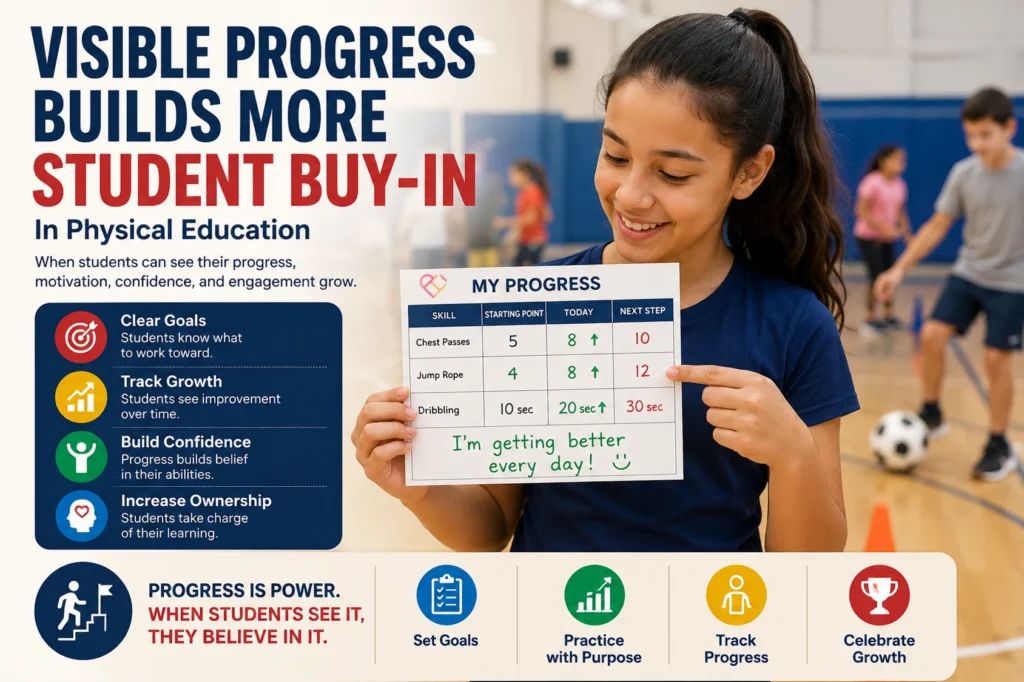
Why Progress Changes Motivation A student may hear “Good job!” several times during a PE class and still wonder, Am I actually improving? Encouragement can reinforce effort, but visible evidence helps students connect that effort to a meaningful result. Visible progress in PE gives students a concrete answer to questions such as: This matters because motivation is stronger when students experience competence, autonomy, and ownership. Research on physical education goal setting indicates that appropriately designed goals can improve task motivation and support the development of physical and developmental skills. Formative assessment can also help students recognize what they already understand and identify what they need to work on next. eric.ed The goal is not to turn PE into a competition or make every lesson about scores. The goal is to help students notice growth. Encouragement Is Not Enough Praise is most useful when it is specific and connected to a behavior. “Nice work” is positive, but “You kept your eyes on the target and followed through” gives students information they can use. Even specific encouragement, however, may not show the full learning process. A student who struggles with an overhand throw may hear positive feedback but fail to recognize gradual improvement in: A simple progress record makes these changes easier to see. It shifts feedback from a general judgment to a learning conversation: “Your accuracy improved from 3 successful throws to 6. What did you change?” That question invites reflection, rather than asking students to rely entirely on the teacher’s opinion. The Evidence Behind Tracking Growth Visible progress connects several evidence-informed practices: Formative assessment Formative assessment provides information during learning, not only after a unit ends. In PE, this may include teacher observation, peer feedback, student reflection, skill checklists, or brief performance demonstrations. Recent research on student involvement in formative assessment found that students benefited from visible examples of quality, clear criteria, targeted teacher questions, and opportunities to discuss performance expectations. These practices helped shift responsibility toward student learning ownership.tandfonline Goal setting Goals give students a specific direction for practice. Effective PE goals should be: For example, “Get better at basketball” is too broad. “Complete five controlled dribbles with my eyes forward” is more useful because the student can practice it and recognize progress. Self-monitoring Self-monitoring asks students to collect or notice information about their own learning. This can strengthen reflection and help students make decisions about practice. A student might record: Self-monitoring should support learning—not label students permanently or rank them publicly. Simple Ways to Make Progress Visible Teachers do not need expensive technology or complicated data systems. A clipboard, index card, whiteboard, or student notebook can be enough. 1. Use a “starting point and next step” card At the beginning of a unit, students record a baseline. The baseline might be a performance count, a skill level, or a short reflection. Example: Skill Starting point Next step Chest passes to a partner 5 accurate passes 8 accurate passes Jump-rope rhythm 4 consecutive jumps 8 consecutive jumps Soccer dribbling Controlled for 10 seconds Controlled for 20 seconds At the end of the lesson or week, students update the card. The emphasis remains on movement from one point to another. 2. Create personal progress ladders A progress ladder breaks a complex skill into manageable stages. Students highlight or circle the level they are currently working toward. For an underhand serve, a ladder might include: Students do not have to move through every level at the same speed. The ladder simply makes the learning pathway visible. This aligns well with standards-based instruction because learning progressions show how students can develop toward broader physical education outcomes. SHAPE America’s National Physical Education Standards include motor skills, movement concepts, social skills, and personal skills related to lifelong physical activity.shapeamerica 3. Track quality, not only quantity Counting repetitions can be useful, but more is not always better. A student who completes 20 poorly controlled repetitions may need a different goal from a student who completes 8 repetitions with strong technique. Use short quality criteria such as: Students can use a three-point scale: This gives students a more accurate picture of growth than a single performance score. 4. Use “before and after” demonstrations Invite students to demonstrate a skill at the beginning and end of a lesson or unit. The demonstrations can be brief and private, partner-based, or recorded only when school policies and family permissions allow it. Students can compare the two attempts using one prompt: The comparison should focus on learning evidence, not appearance or athletic ability. 5. Add progress checkpoints Build short checkpoints into instruction rather than waiting for a final assessment. A checkpoint might ask students to: A two-minute checkpoint at the end of class can provide more useful information than a lengthy end-of-unit test. Make Tracking Motivating Progress tracking can increase ownership, but only when students experience it as supportive. Poorly designed tracking can create anxiety, embarrassment, or unhealthy comparison. Use these principles: Compare students with their own previous performance A personal-best model helps students focus on growth. It also recognizes that students begin with different experiences, abilities, confidence levels, and access to physical activity. Instead of displaying a class leaderboard, display examples of learning behaviors: Let students help choose goals Offer a small menu of appropriate goals or allow students to select a target within a defined range. Choice supports autonomy, one of the psychological needs associated with self-determined motivation in PE. Research has linked more self-determined forms of motivation with desirable engagement-related responses in physical education.pmc.ncbi.nlm.nih For example, during a fitness circuit, students might choose to improve: Keep records private and purposeful Progress charts should belong to the student, teacher, or learning team—not function as public rankings. Avoid requiring students to publicly disclose: Use secure, age-appropriate systems when collecting digital data. For many PE goals, a paper tracker or teacher observation note may be sufficient. Celebrate strategies, not just outcomes A student may not reach a target every time. However, the student may still demonstrate meaningful growth by
Why Some Students Resist PE at the Start of the Year—and What Teachers Can Do Early
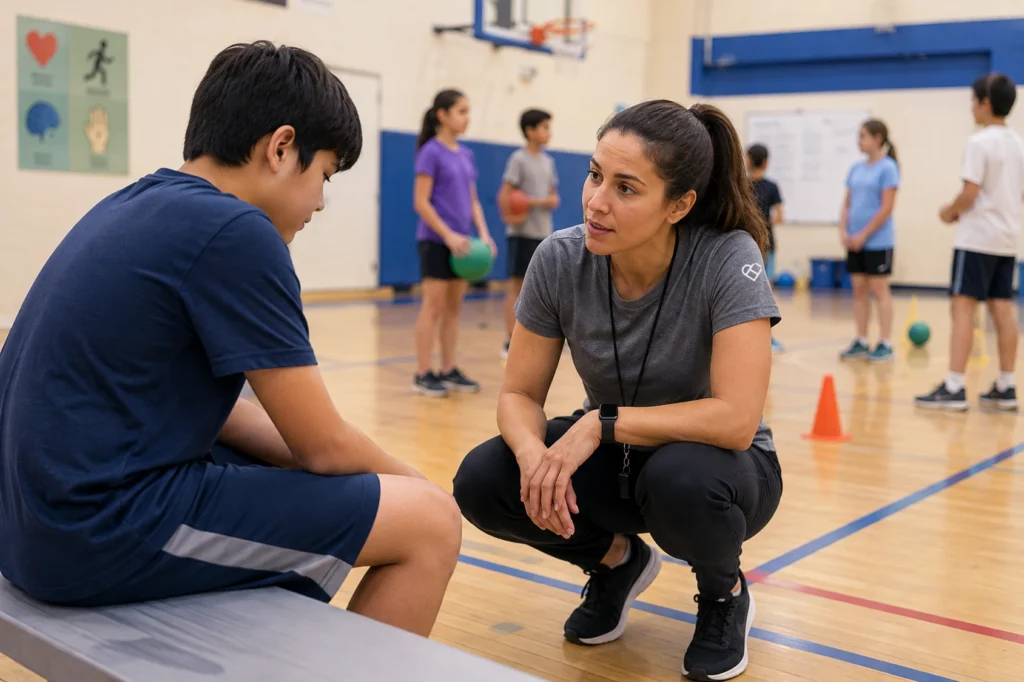
Some students walk into physical education ready to move. Others hang back, avoid eye contact, ask to sit out, joke around, or quietly do the minimum. That early resistance is rarely just “laziness” or defiance. Student resistance in PE often reflects a perceived threat: the possibility of being embarrassed, exposed as less skilled, judged by peers, or forced to repeat a negative experience from a previous class. PE is unusually public. Students may be asked to perform, sweat, change clothes, compete, and make mistakes in front of classmates—all while navigating a new teacher, new routines, and changing social dynamics. The first few weeks matter because students quickly form beliefs about whether PE is safe, fair, relevant, and a place where they can succeed. When teachers identify the root causes of resistance early, they can prevent avoidance patterns from becoming entrenched. Student Resistance Is Often Self-Protection Resistance can look like refusal, off-task behavior, disengagement, frequent requests for breaks, criticism of activities, or reluctance to try. But behavior is only the visible layer. Underneath it may be anxiety, low perceived competence, uncertainty, social pressure, or memories of prior embarrassment. Research on students’ experiences in PE finds that stressors can come from the teaching environment, social environment, physical setting, lesson content, and students’ own interpretations shaped by prior experiences. In other words, the same activity may feel energizing to one student and threatening to another.pmc.ncbi.nlm.nih Rather than asking, “Why won’t this student participate?” a more productive early-year question is: “What might make participation feel risky for this student right now?” That shift helps teachers respond with structure, empathy, and instructional design—not assumptions or escalating consequences. Five Root Causes of Resistance 1. Embarrassment and fear of public failure PE puts student performance in view. A missed catch, slow run, incorrect dance step, or difficulty with a movement pattern can feel highly visible—even when classmates are not paying as much attention as the student believes. Body-related concerns, physical discomfort, and body insecurity are documented barriers to PE participation, particularly for many adolescent girls. Research also links body perception and health concerns with lower PE participation, with autonomous motivation playing an important role in the relationship.frontiersin Students may resist participation because they fear: What teachers can do: Normalize learning and mistakes from day one. Use language such as, “We are here to practice, not to perform perfectly,” and avoid structures that publicly rank students by speed, fitness, or skill. Teach students how to give specific, respectful feedback and intervene immediately when teasing or exclusion occurs. 2. Uncertainty about routines and expectations The start of the year introduces many unknowns: Where do students go? How are teams formed? What happens if they do not understand a skill? What does participation mean? Will they be graded on athletic ability? Who can they ask for help? For a student who already feels unsure about PE, unclear routines can raise the perceived risk of participation. Predictable rules, routines, and expectations help establish emotional and physical safety, especially for students whose previous school experiences have made group activity feel stressful.usq.pressbooks What teachers can do: Explicitly teach routines rather than assuming students know them. Model entry procedures, equipment expectations, attention signals, safety practices, partner selection, and help-seeking. Post visual directions and use short practice rounds before expecting full participation. A useful early-year message is: “You will always know what we are doing, why we are doing it, and how to get help.” 3. Low perceived competence Students do not need to be highly skilled to participate willingly. They do, however, need to believe improvement is possible. When a student thinks, “I am bad at sports,” “Everyone else already knows how to do this,” or “I will never be good at PE,” avoidance can become a logical self-protection strategy. Competitive, sport-dominant lessons can be particularly discouraging for students who see themselves as less athletic than classmates. Research suggests students’ beliefs about control and value matter: stronger perceptions of control and intrinsic value are associated with more positive PE-related outcomes, while boredom and shame can negatively affect self-esteem and intentions to be physically active.memphis What teachers can do: Design early lessons for quick, authentic success. Break complex skills into manageable progressions, offer varying levels of challenge, and give feedback that focuses on effort, strategy, and improvement. Instead of saying, “You’re a natural,” try: This communicates that competence is developed through practice, not something students either have or lack. 4. Social comparison and peer judgment Students naturally compare themselves with others, but PE can intensify that comparison. Teams, races, fitness tests, demonstrations, and elimination games can signal who is “good” and who is not. Students may also worry that classmates are judging them, especially during adolescence. In studies of student perspectives, negative PE experiences have been associated with embarrassment, exposure, judgment, and intimidation, particularly when activities emphasize competition or reveal differences in athletic ability.scholars.fhsu What teachers can do: Reduce unnecessary public comparison. Avoid captains choosing teams, elimination-based games, public fitness rankings, and activities where less-skilled students wait while more-skilled students dominate play. Instead, use: The goal is not to remove challenge. It is to make challenge instructional rather than socially punitive. 5. Prior negative experiences in PE Students arrive with histories. A student may have been excluded from games, embarrassed during a fitness test, criticized by an adult, bullied by peers, or repeatedly told—directly or indirectly—that PE is for athletes. Research on PE stressors emphasizes that students’ past experiences influence how they appraise current situations. A student who had a negative experience in last year’s basketball unit may interpret a new basketball activity as proof that the same outcome will happen again.pmc.ncbi.nlm.nih Teachers may never know every student’s history. Still, they can build a classroom environment that does not require students to disclose it before receiving support. What teachers can do: Avoid beginning the year with high-exposure activities, public performance tests, or heavily competitive games. Build trust through inclusive, low-stakes learning experiences. Give students appropriate choices, invite anonymous feedback, and make it clear that
What PE Teachers Need to Know About Starting the Year With Better Baseline Data
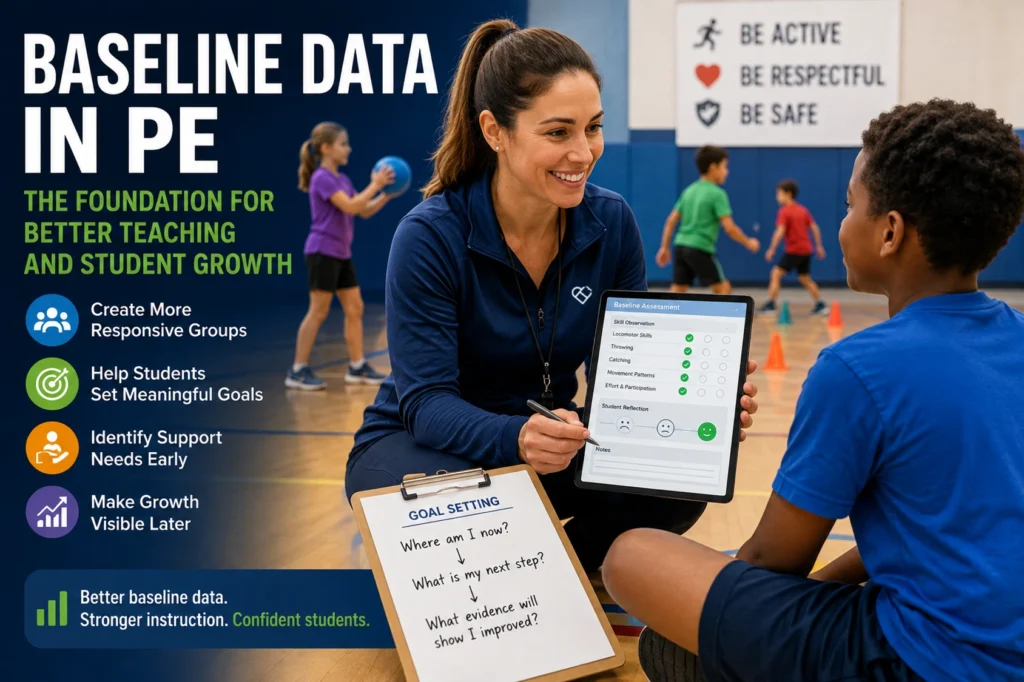
The first few weeks of school are an opportunity to learn far more than students’ names and preferred activities. When PE teachers collect purposeful baseline data in PE, they gain a practical starting point for planning instruction, supporting individual learners, and showing student growth over time. The goal is not to turn every opening lesson into a test. It is to gather just enough high-quality evidence to answer a few important questions: Baseline data is simply evidence of a student’s performance at the beginning of an instructional period. It can include a beginning-of-year skill check, prior assessment data, a knowledge prompt, a student self-reflection, or a portfolio artifact—not just a formal pre-test. When teachers compare that starting point with later evidence, they can make better decisions about progress toward learning goals.ride Why Baseline Data Matters in PE High-quality PE assessment should help teachers improve learning, not merely produce a score. Research and professional guidance describe assessment as a way to gather evidence across physical, cognitive, and affective learning—not only fitness outcomes. Starting with better baseline data in PE helps teachers do four things especially well. 1. Create more responsive student groups A quick baseline skill observation can reveal patterns that are hard to see during a whole-class activity. For example, in an elementary throwing and catching unit, a teacher might observe whether students: This information can support short-term, flexible grouping. One group may practice foundational movement patterns with larger or softer equipment, while another works on accuracy, decision-making, or applying the skill in a small-sided game. The key word is flexible. Baseline groups should never become permanent labels such as “low,” “average,” or “advanced.” Data-informed grouping works best when teachers set a clear learning purpose, watch for unequal participation or stigma, and regularly regroup students as their needs change.nwea 2. Help students set meaningful goals A goal is more motivating when a student understands their starting point. Rather than telling every student to reach the same outcome on the same timeline, PE teachers can help students set goals based on current performance and the specific standard being taught. For instance, a middle school student who currently completes a locomotor sequence with two of four key cues may set a goal to consistently demonstrate all four cues in a partner-designed sequence. Another student who already demonstrates the cues may focus on applying them with control, rhythm, and spatial awareness in a game or dance context. This approach shifts the conversation from comparison to growth: “Where am I now, what is my next step, and what evidence will show that I improved?” Student self-assessment, goal setting, reflection, and feedback are all identified by SHAPE America as assessment practices that support student growth and motivation.shapeamerica 3. Identify support needs early Early evidence makes it easier to plan access before students experience repeated frustration. A baseline can identify students who may need: This is why baseline assessment should include more than a score. A checklist, brief teacher notes, student reflection, and observation of meaningful participation can provide a fuller picture than one timed or fitness-based measure alone. Accurate and sufficient PE data can make placements, planning, instructional modifications, and feedback more valid and effective. In practical terms, better evidence helps teachers act sooner rather than waiting until the end of a unit to discover that students needed a different pathway.eric 4. Make growth visible later Without a starting point, it is difficult to show progress convincingly. A final performance score might show that a student met a standard, but it does not necessarily show how far they traveled to get there. For example: Student Fall skill baseline Spring evidence Growth story A Uses 2 of 5 dribbling cues Uses 5 of 5 cues in a small-sided game Improved technique and application B Avoids peer leadership roles Leads warm-up with clear instructions Improved confidence and communication C Identifies 1 fitness principle Explains and applies 4 principles to a personal plan Improved health literacy This evidence can strengthen student-led conferences, progress reports, parent communication, department discussions, and advocacy for PE. SHAPE America highlights data collection, monitoring, evaluation, and dissemination as essential elements of showing the impact of high-quality physical education.shapeamerica Collect Smart Data, Not Excessive Data Better baseline data in PE does not mean assessing every standard during the first week. It means choosing a few measures that are aligned, manageable, and useful. A strong baseline measure is: For fair growth comparisons, pre- and post-assessments should use similar instructions, conditions, standards, and levels of cognitive demand. That does not mean the tasks must be identical; it means they should measure the same intended learning.ride A Practical First-Month Baseline Plan Instead of scheduling a week of testing, embed short evidence-gathering opportunities into regular PE lessons. Area Simple baseline method What it tells you Motor skills One-minute teacher observation using a 3–5 criterion checklist Movement patterns, control, and next instructional steps Knowledge Three-question entrance prompt or digital check-in Vocabulary, rules, safety, and health concepts Confidence and interests Student survey or four-corners response Preferred activities, perceived competence, concerns, and goals Personal and social responsibility Observation during partner work Cooperation, communication, self-management, and leadership Fitness education Student reflection on current habits and a health-related fitness concept Understanding and readiness for individualized learning Keep the process low stakes. Let students practice first, clarify that the purpose is planning rather than ranking, and share what the data will be used for. What to Avoid Baseline data becomes less useful when teachers collect numbers that do not guide a decision. Avoid these common traps: Fitness assessments can be part of PE, and the CDC notes that schools may use fitness testing to assess students’ fitness levels. But fitness numbers alone do not capture skill development, knowledge, confidence, cooperation, or meaningful participation. Use them as one relevant source of evidence within a broader assessment plan.archive.cdc Turn Data Into Better Teaching The value of baseline data in PE is not the spreadsheet. It is the next teaching decision. After reviewing your evidence, ask: For
How District Leaders Can Win Big by Protecting PE: A Teacher’s Guide to Making Physical Education Essential
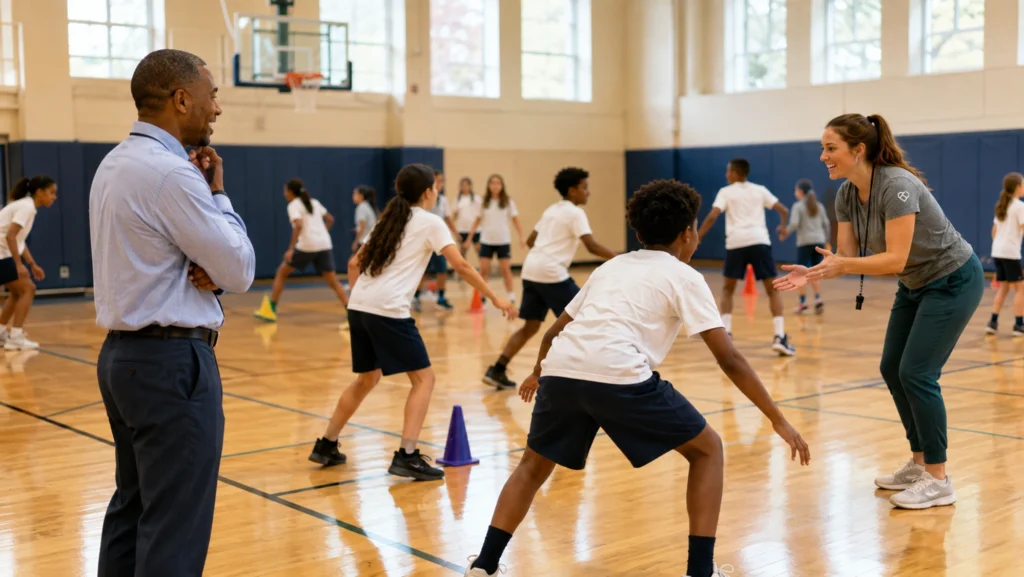
If you are a district leader or principal, you are already carrying a heavy load: budgets, staffing, testing pressure, parent expectations, and the constant demand to do more with less. As a physical education teacher, I want to make one thing clear: protecting PE is not an extra ask. It is one of the smartest leadership decisions you can make for student health, attendance, behavior, and long-term school success. Research from the National Academies and CDC-supported reviews shows that quality physical education supports children’s health and is tied to broader educational benefits, while schools with certified PE teachers and district-level priority are better positioned to deliver strong programs.ncbi.nlm.nih+2 The real message leaders need to hear Most district leaders do not need another lecture about why PE is “important.” They need to hear how PE solves problems they already care about. PE can support better student engagement, help create calmer classrooms, and strengthen a school’s overall wellness culture. When PE is treated as core to the school experience instead of as a nonessential add-on, leaders gain a practical tool for improving the conditions that affect learning across the building.ncbi.nlm.nih+1 The key is to frame PE as a leadership win, not a staffing request. Start with the leader’s priorities If you want district leaders to change their mind, speak their language. District leaders are not usually resisting PE because they dislike it. More often, they have not yet seen PE positioned as part of the solution. Make the district leader the hero The most effective advocacy does not say, “Save my program.” It says, “You have the chance to lead.” That shift matters. As a PE teacher, I would approach a superintendent or principal like this: “You can be the leader who protects a program that serves every child, strengthens school culture, and supports the whole mission of the district.” That language gives leaders a positive identity to step into. It lets them see themselves as the person who chose evidence over assumptions and long-term value over short-term cuts. This approach is especially powerful when budgets are tight. Instead of arguing that there is “money somewhere,” acknowledge the pressure and then show that PE is not a luxury to revisit later. It is a foundational part of a whole-school strategy for student development.nationalacademies+1 What to bring to the conversation A hard-core leadership audience responds to clarity, not volume. Bring a short, focused case with three parts: You can also include simple local evidence. Share attendance patterns, student enthusiasm, classroom teacher feedback, behavior observations, or examples of cross-curricular connections. Leaders are far more likely to act when they can see the program’s effect in their own system. Strategies that work with resistant leaders Some leaders are open to PE in theory but dismiss it when they feel pressure from staffing or funding. In those cases, the goal is not to win an argument. It is to reduce resistance. When leaders see PE as efficient, visible, and aligned with their goals, it becomes much easier for them to support it publicly. Addressing the budget crisis honestly Budget pressure is real. But “budget crisis” is often used as a reason to cut what is easiest to cut, not what matters least. That distinction is important. PE is frequently vulnerable because its value is not always measured as immediately as test scores or compliance metrics, even though it plays a major role in student well-being and school functioning.skillastics+1 A better budget conversation asks: what is the return on protecting PE? If a school removes the one subject that builds physical literacy, movement confidence, and healthy habits for all students, it may save money today while paying for it later in other forms of need. Quality PE is prevention, culture-building, and student support all at once.nationalacademies+1 Reframing PE as essential The strongest argument for PE is not sentimental. It is structural. Physical education is one of the only school subjects designed to serve every child through active learning, skill development, and lifelong health habits. When districts treat it as essential, they are not just preserving a class period. They are affirming that student development includes more than academics alone.nationalacademies That is a message district leaders can own proudly: “We protect PE because we protect the whole child.” Closing from a teacher’s perspective As a PE teacher, I do not want district leaders to see me as someone asking for protection. I want them to see me as a partner helping them lead well. When PE teachers speak with evidence, humility, and a clear focus on district priorities, leaders are more likely to listen. And when leaders choose to protect PE, they are not just saving a program. They are making a visible commitment to student health, school culture, and long-term success.
How to Make PE Classroom Activities Matter in the Real World
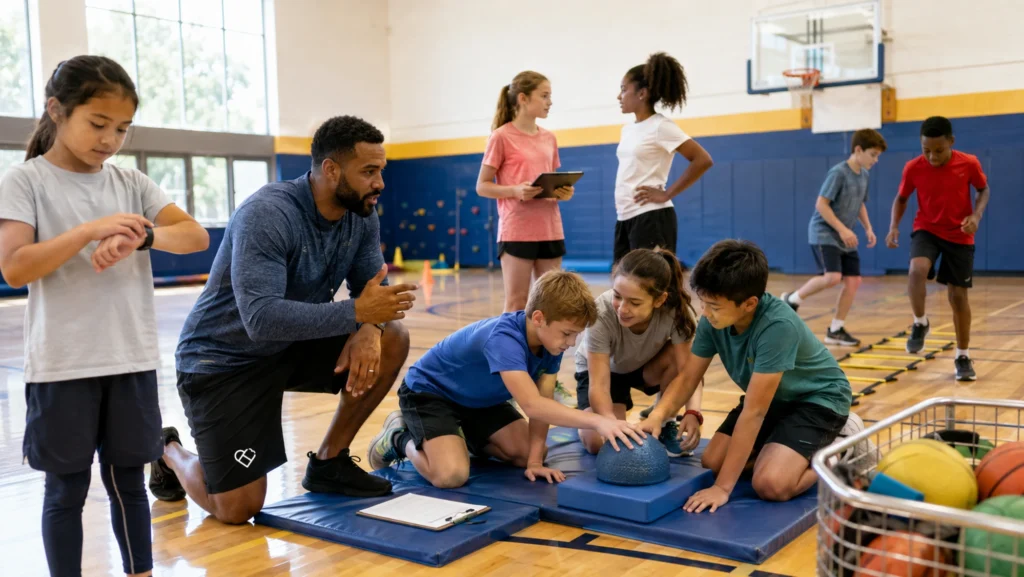
Physical education should do more than fill time with movement. The best PE lessons help students build skills they can use outside the gym: working with others, managing effort, solving problems, making healthy choices, and staying active for life.ncbi.nlm.nih+1 That is why real-world relevance matters. When students understand how a lesson connects to sports, health, school, family life, and future work, they are more engaged, more reflective, and more likely to value PE as a meaningful part of their education. For PE teachers and district leaders, that shift turns PE from a standalone class into a program that supports whole-child learning.pescholar+1 Why real-world relevance matters in PE Students are more motivated when they can see a purpose behind what they are doing. Meaningful physical education emphasizes personal significance, critical thinking, social interaction, and the ability to connect learning to life beyond PE.pescholar+1 That matters for several reasons. First, it increases student buy-in. Second, it strengthens transfer, which is the ability to use a learned skill in a new setting. Third, it helps districts show that PE supports wellness, social-emotional learning, and lifelong habits, not just activity minutes.ncbi.nlm.nih+1 Teach the life skill directly One of the simplest ways to make PE matter is to name the life skill during the lesson. Don’t assume students will “get it” on their own. Explain what the activity is teaching and where that skill shows up outside school. For example: This approach fits research on school physical education that emphasizes meaningful content and appropriate instruction, not just participation. It also aligns with life-skills-focused PE practice that intentionally teaches social and personal skills through movement.ncbi.nlm.nih+1 Build authentic learning tasks Real-world PE becomes more powerful when students do things they might actually use in life. That can include tracking effort, reading data, working with a partner, adjusting a plan, or applying movement in practical contexts. Strong examples include: For instance, a lesson on pacing can help students understand endurance in sports, physical labor, or long-term fitness habits. A lesson on balance can connect to gymnastics, dance, injury prevention, and everyday movement safety. Make reflection part of every lesson Reflection is where PE becomes memorable and transferable. A short discussion, journal prompt, or exit ticket can help students identify what they learned and why it matters. Useful reflection prompts include: Meaningful PE research highlights the importance of critical thinking, personal relevance, and helping students connect learning to their lives beyond school. Reflection makes those connections visible.pescholar+1 Design lessons for district priorities District leaders often want to know how PE supports broader goals. A strong PE program can reinforce wellness, SEL, student engagement, and school climate when it is designed with intention.ncbi.nlm.nih+1 Administrators can support this by: This helps PE show its value as an academic and developmental subject, not just a break from classroom learning. Practical example: turn a relay into a real-world task A standard relay can become much more meaningful with a simple redesign. Instead of only racing for speed, ask students to complete a community wellness challenge where each station includes a life skill. Stations might include: At the end, ask students how those same skills matter in sports, emergency situations, school projects, or future jobs. That final conversation is what turns movement into meaning. What PE teachers can do tomorrow If you want to make PE more relevant right away, start small. Try this: Small changes compound quickly. Once students expect PE to connect to real life, they start thinking differently about every activity. What district leaders should look for For district administrators, the best question is not “Did students move?” It is “What did students learn that will last?” Look for PE lessons that: That is the kind of PE program that earns trust, supports school goals, and feels worth protecting. FAQ: Real-world PE activities What are real-world PE activities? Real-world PE activities are lessons that teach transferable skills such as cooperation, goal setting, self-management, fitness literacy, and problem-solving. They help students connect movement to life outside school.blog.gophersport+1 Why should PE activities matter beyond the gym? PE matters beyond the gym because it can shape lifelong health habits, social skills, and confidence. When students see purpose in the lesson, they are more likely to engage and remember what they learned.ncbi.nlm.nih+1 How do you make PE more meaningful for students? Make PE more meaningful by teaching the purpose of each lesson, using authentic tasks, and adding reflection. Meaningful PE also gives students some choice and helps them connect learning to their own lives.pescholar+1 How can district leaders support meaningful PE? District leaders can support meaningful PE by asking for life-skill goals in lesson plans, encouraging cross-curricular connections, and recognizing PE as part of wellness and whole-child development.ncbi.nlm.nih+1 What is one easy way to improve PE relevance today? Start each lesson by naming the real-world skill students are practicing, then end with one reflection question about where that skill shows up outside PE.
How to Build Routines That Make PE Classes Run Better From Day One
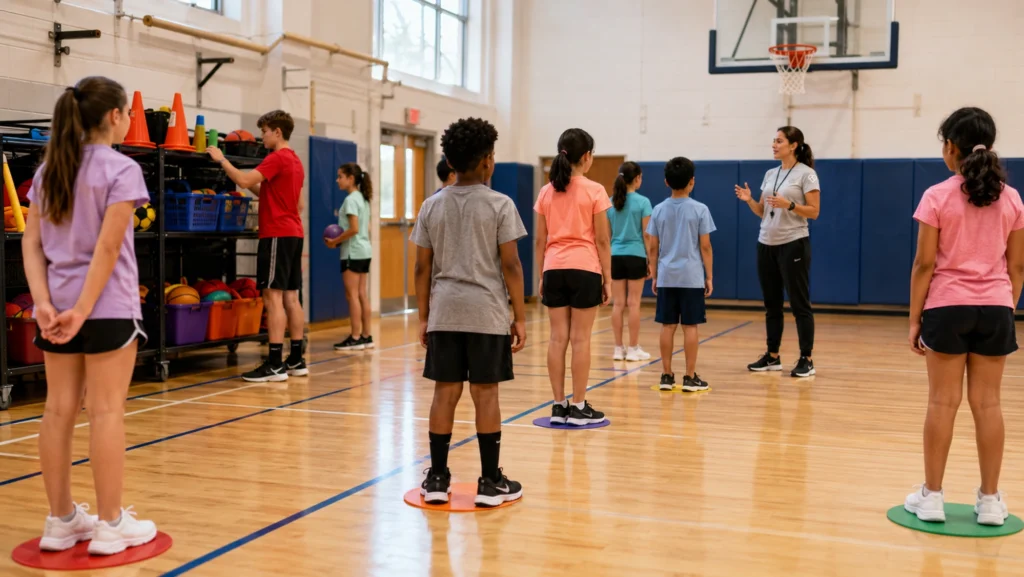
This article draws on PE management research and SEL literature to show how routines support behavior, time on task, and participation If you want PE classes to run better from the start of the school year, routines are not just helpful — they are a core management strategy. Research in classroom management shows that identifying and teaching routines early is a key evidence-based practice, and PE-specific research suggests that clear routines can reduce disruptions and protect activity time. In physical education, where students are constantly moving, sharing space, and switching tasks, those routines matter even more. Why routines matter in PE PE is a high-movement environment, which means students are making dozens of small decisions every class period: where to go, when to stop, how to get equipment, what to do during transitions, and how to respond to signals. When those expectations are unclear, teachers lose time reteaching directions and correcting behavior. When those expectations are taught early and reinforced consistently, students spend less time guessing and more time learning. A PE management study found that quality can be improved by establishing, protecting, and strengthening activity-promoting resources and instructional practices. In practical terms, that means routines are not “extra.” They are part of the instructional design that helps PE function well.pmc.ncbi.nlm.nih Teach transitions first One of the most valuable routines to teach at the start of school is the transition routine. In PE, transitions are often where time is lost: entering the gym, getting equipment, freezing on a signal, rotating stations, cleaning up, and lining up to leave. A well-taught transition routine reduces confusion and helps students move quickly without repeated teacher prompting. This matters because time on task is strongly connected to learning opportunities. If students know exactly what to do when they hear a whistle or see a signal, the class becomes smoother and more efficient. The routine should be modeled, practiced, and revisited until it is automatic. Make expectations explicit Evidence-based classroom management recommends defining and teaching expectations early rather than assuming students will infer them. In PE, the best expectations are simple, visible, and repeatable. Examples include: be safe, be respectful, be ready, and be active.dropoutprevention These broad expectations work because they can be applied across units, grade levels, and activities. They also reduce the cognitive load on students: instead of memorizing a long list of rules, they can anchor their behavior to a few consistent standards. That kind of clarity is especially important in a space where excitement and movement can easily overwhelm attention. Build self-management into the lesson Self-management is one of the most important social-emotional skills students can practice in PE. Research on SEL in PE shows that social-emotional learning is most effective when it is intentionally integrated into instruction rather than left implicit. That means PE is not only a place to move; it is also a place to practice responsibility, emotional regulation, cooperation, and persistence.ped.nm+1 Teachers can support self-management by giving students predictable roles, clear task directions, and short routines for starting, stopping, and resetting. For example, students can be taught to get equipment independently, check their personal space, and recover quickly when a task is challenging. Over time, those habits improve flow and reduce the need for constant correction. Set participation norms early Participation norms help students understand what active engagement looks like in PE. This is especially important because physical activity is linked with attention and behavior benefits, including reduced disruption and improved on-task behavior in school settings. In PE, that means participation should not be treated as optional or vague — it should be defined and taught.ncbi.nlm.nih+1 Participation norms might include listening during demos, trying every task safely, staying active during practice, and supporting classmates respectfully. A classroom climate that normalizes effort and mistakes can also help more students engage, especially those who feel less confident in sport or movement tasks. When students know that participation means effort, not perfection, they are more likely to stay involved. Use SEL routines on purpose The best PE routines do more than manage behavior. They also create repeated opportunities for SEL. Recent research on SEL in PE emphasizes that social-emotional skills develop best when instruction is structured, active, and intentionally practiced. That means routines can become vehicles for teaching cooperation, self-awareness, and decision-making.ped.nm+1 For example, a partner-check routine before a cooperative task can teach communication and respect. A reset routine after conflict can teach emotional regulation. A reflection routine at the end of class can help students identify effort, teamwork, or improvement. These are small practices, but they make SEL visible and teachable. Reinforce routines all year Routines are strongest when they are practiced consistently, not just introduced once in August. Evidence-based management approaches stress that expectations and routines need to be taught, reinforced, and revisited across the school year. In PE, that means reteaching a routine whenever students start to drift or a new unit changes the structure of class.dropoutprevention This does not require a full reset every time. Often, a quick reminder, a brief model, or one round of practice is enough. The goal is to keep routines stable so students can focus on the lesson instead of the logistics. Common mistakes to avoid A common mistake is assuming students already know how PE works. Even if they have had PE before, they may not know your signals, your expectations, or your transitions. Another mistake is teaching routines once and moving on too quickly. Inconsistent follow-through is another problem. If one teacher response is immediate and another is ignored, students get mixed messages about what matters. Consistency is what turns a routine into a habit. A simple first-week framework If you want a practical starting point, focus the first week on four routines: These four routines give you a foundation for behavior, safety, and active learning. They also make it easier to teach SEL skills later because students are already functioning within a predictable structure. Closing thought Science does not suggest that routines are just a classroom convenience.
The PE Audit District Leaders Should Run Before School Starts
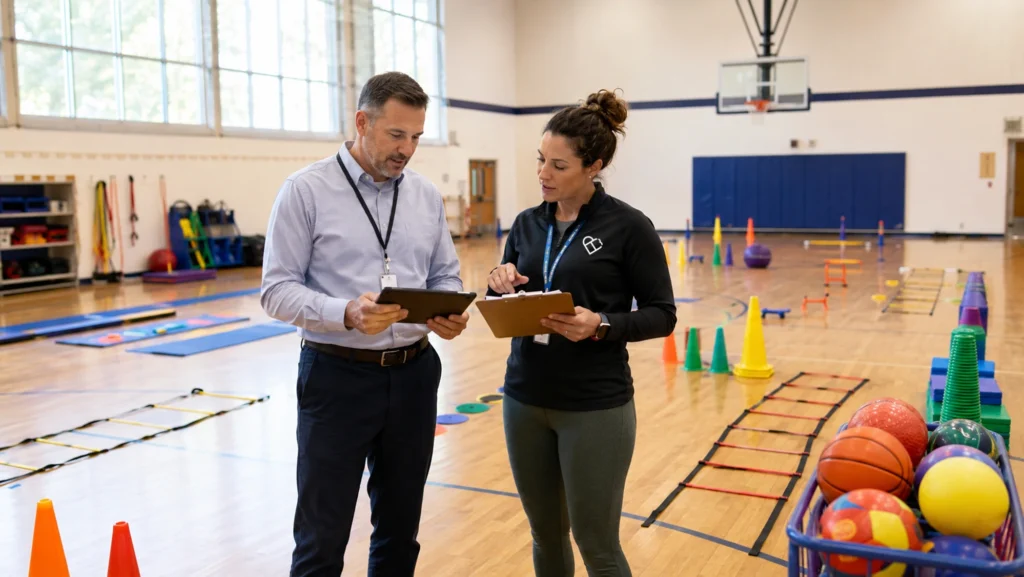
District leaders often spend summer preparing schedules, staffing, and facilities for the new school year. One area that deserves the same attention is physical education. A summer PE audit gives districts a simple, evidence-based way to check whether students are getting fair access to quality instruction, meaningful assessment, and enough opportunity to move, learn, and improve. Physical education is more than a class that keeps students busy between academic subjects. When it is designed well, PE helps students build motor skills, confidence, and healthy habits that can support lifelong physical activity. That is why a district-level review matters. A strong audit can reveal whether PE is being taught consistently, whether students are receiving enough active learning time, and whether the program is set up to support real growth. Why a PE audit matters A PE audit helps district leaders see the program clearly before the first bell rings. Without a structured review, problems can hide in plain sight: uneven class time, inconsistent curriculum use, limited equipment, weak assessment practices, or too much time spent standing instead of moving. Summer is the right time for this work because it creates room to make improvements before students return. It also gives district leaders a chance to align PE with broader goals such as wellness, engagement, attendance, and whole-child development. Instead of reacting to problems later in the year, districts can start with a clearer plan and stronger expectations. What district leaders should review The first area to examine is access. Every student should have a fair opportunity to participate in physical education, and districts should check whether PE time is consistent across schools and grade levels. Leaders should also ask whether staffing, scheduling, and class sizes support meaningful instruction rather than simple supervision. The next area is instruction. High-quality PE is intentional, developmentally appropriate, and built around clear learning goals. Students should spend most of class time practicing skills, receiving feedback, and applying movement concepts. If large chunks of class are lost to waiting, transitions, or organization, the program may not be using time effectively. Assessment is another key part of the audit. PE should measure more than participation. Districts should look for evidence that teachers are tracking student progress, skill development, and understanding in ways that can inform instruction. When assessment is used well, it helps teachers see what students are learning and where support is still needed. Signs of strong PE A science-based PE program usually includes frequent movement, repeated practice, thoughtful feedback, and opportunities for students to build competence over time. These features matter because students are more likely to stay engaged when they feel successful in movement tasks. Confidence and skill development can also support future participation in physical activity outside school. District leaders should also consider whether the curriculum supports physical literacy. That means students are not just active for the sake of being active. They are learning how to move well, how to apply skills in different contexts, and how to develop habits that can last beyond one school year. Questions to ask Use these questions to guide the audit: These questions help district leaders move from general oversight to practical action. They also make it easier to identify whether the district needs stronger curriculum support, more resources, or clearer implementation expectations. Why this matters for districts A strong PE program supports more than fitness. It can improve student engagement, reinforce school climate, and help schools demonstrate a commitment to whole-child development. When students have better experiences in PE, they are more likely to participate, improve, and build positive associations with movement. For district leaders, that makes PE worth reviewing with care. A summer audit does not need to be complicated to be useful. It just needs to be clear, consistent, and focused on what students are actually experiencing. Final takeaway District leaders can strengthen physical education before school starts by running a simple, science-based audit. The goal is to make sure PE is equitable, active, purposeful, and ready to support students from day one. When districts start with that kind of review, they give teachers better conditions and students a better chance to succeed. FAQ What is a PE audit?A PE audit is a structured review of a school or district’s physical education program to evaluate access, quality, assessment, and support. Why should districts audit PE in summer?Summer gives leaders time to identify gaps and make improvements before students return. What makes PE science-based?Science-based PE uses evidence-informed practices such as skill progression, active learning, effective feedback, and meaningful assessment. What should district leaders look for first?Start with access, instructional time, and whether students receive equitable opportunities across schools.
The Hidden Cost of Manual Assessment Tracking in Physical Education (And How to Fix It Before School Starts
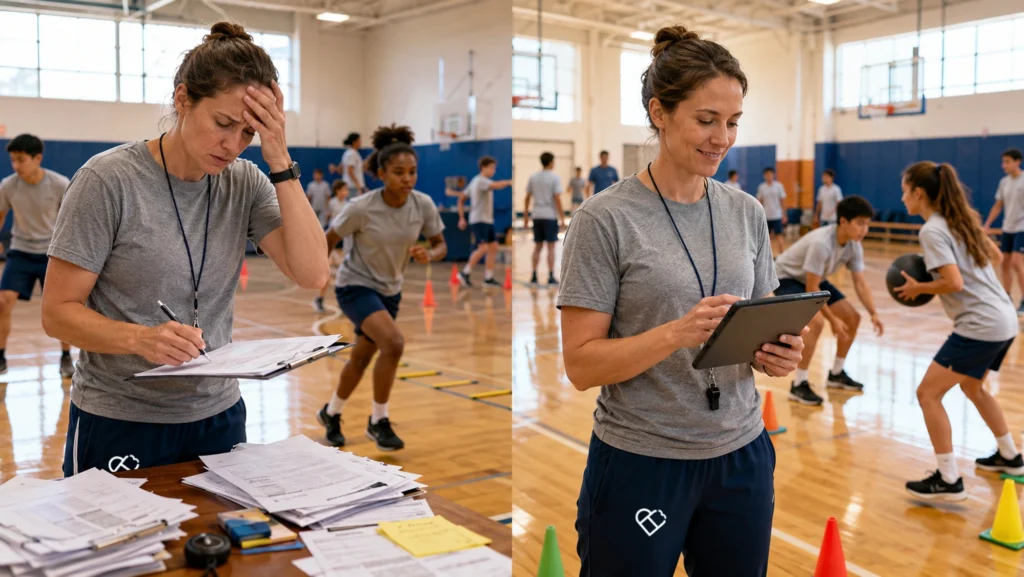
Manual assessment tracking in physical education is often framed as a time issue. Teachers spend hours entering scores, managing spreadsheets, and organizing paperwork. But the real cost runs deeper. When assessment workflows rely on manual systems, the impact extends into data quality, instructional decisions, and ultimately student outcomes. For district leaders and administrators, this creates an even bigger concern: the inability to generate reliable, scalable reporting—especially in programs with large class sizes. As schools prepare for a new academic year, this is the moment to evaluate whether existing systems are supporting—or silently undermining—your program. The Data Problem: Inconsistency at Scale Manual systems introduce variability at every step of the assessment process. Whether it is clipboard-based tracking, disconnected spreadsheets, or delayed data entry, these workflows increase the likelihood of inconsistent data collection. Research in educational measurement shows that reliability depends on standardized procedures and consistent recording methods. In physical education, where teachers manage multiple large classes with limited time, small inconsistencies compound quickly. Common issues include: The result is data that appears complete but lacks the reliability needed for instructional or district-level decision-making. Large Class Sizes Multiply the Problem Physical education consistently operates with some of the largest student-to-teacher ratios in K–12 education. Classes of 40, 60, or more students are common. In these environments, manual assessment tracking in PE does not just slow teachers down—it forces trade-offs that directly affect data quality. Teachers often have to: From a measurement standpoint, this introduces both reliability and validity issues. Not all students are assessed under the same conditions, and recorded results may not accurately reflect actual performance. For district buyers, this is a critical issue: scaling a program across large class sizes without a system designed for that scale guarantees inconsistent data. The Class Report Breakdown Large class sizes expose one of the most significant weaknesses in manual systems—the inability to produce meaningful class-level reports. Class reports should answer essential questions: But with manual tracking across large classes, reporting often becomes: For administrators, this creates a visibility problem. Without clean, aggregated data, it is difficult to evaluate program effectiveness, support educators, or justify funding. Instead of being a decision-making tool, the class report becomes a compliance artifact—submitted, but not used. Weak Reporting Limits Program Impact Inconsistent data and broken reporting workflows make it difficult for physical education programs to demonstrate value. District leaders increasingly expect measurable outcomes aligned to standards, wellness initiatives, and accountability frameworks. Manual systems make it difficult to: This disconnect can make strong PE programs appear less effective than they actually are—simply because the data does not tell a clear story. Missed Opportunities for Student Support The most important impact is on students. Timely and accurate data is essential for identifying who needs support and when. In large classes, where individual attention is already limited, data becomes even more critical. Manual workflows disrupt this process by creating delays and gaps in insight. This leads to: Formative assessment research consistently shows that instruction improves when teachers have immediate, actionable data. Manual systems break this feedback loop—especially at scale. The Workflow Is the Root Issue This is not simply a time problem. It is a workflow problem. Manual systems were not designed for: Even highly effective teachers cannot overcome these structural limitations on their own. For districts, this means the issue is systemic—not individual. Fixing it requires rethinking how assessment data is collected, managed, and reported across the program. Why Summer Is the Critical Window The period before school starts is the most strategic time to address assessment workflows. During the school year, instructional demands make change difficult. Pre-year planning creates the opportunity to: For district leaders, this is the window to ensure that reporting systems align with both instructional needs and accountability goals from day one. A Simple Example Consider two PE programs assessing aerobic capacity using a PACER test. Program A uses manual tracking: Program B uses a structured, scalable workflow: Both programs administer the same assessment. Only one can use the data to drive instruction, support students, and demonstrate impact at the district level. Moving Forward Improving assessment in physical education is not about adding more tasks. It is about ensuring that the data you already collect is accurate, consistent, and usable—especially in large class environments. Manual assessment tracking in PE introduces hidden costs that go far beyond time. It weakens data quality, limits reporting, and reduces the ability to support students effectively. For schools and districts, the path forward starts with fixing the workflow before the year begins—so that assessment becomes a tool for insight, not just a requirement.
How to Design a PE Program That Builds Confidence Across the Year
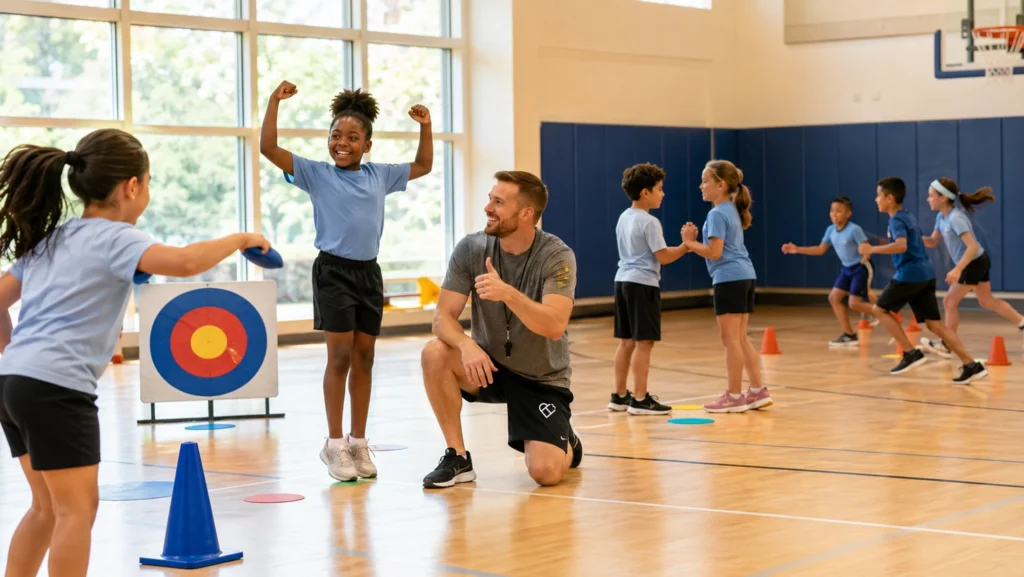
Confidence building in PE is not just a morale issue; it is a learning issue. Research on self-determination theory shows that when students experience competence, autonomy, and relatedness, they are more likely to show adaptive motivation, and competence satisfaction is strongly linked to autonomous motivation in PE. That means confidence should be intentionally designed into the yearly plan, not left to chance.eric.ed Sequence challenge with intention Students build confidence when difficulty is structured so success comes early and then grows over time. In motivation and motor learning research, students are more likely to persist when tasks feel achievable and progress is visible, because early success strengthens perceived competence and readiness for the next challenge. A PE program that starts with simple movement patterns and gradually moves to more complex applications gives students repeated mastery experiences, which are a key source of self-efficacy. For example, a throwing unit can begin with stationary target work, then move to partner practice, and later shift into small-sided games. That sequence supports both skill learning and confidence because students practice success before the task becomes more open and unpredictable.research.vu Large-class adaptation: In larger classes, use zones or stations so students can work at different challenge levels at the same time. This keeps students active, reduces waiting, and allows the teacher to match challenge more efficiently across a wide range of ability levels. Use feedback that builds belief Feedback matters because it tells students what to do next, and research shows that positive, specific feedback can improve both motivation and skill learning. In PE, feedback is most useful when it is immediate, task-focused, and tied to a controllable action rather than a vague judgment. That kind of feedback supports self-efficacy because students can connect their effort to a concrete improvement. Instead of saying “good job,” a more effective cue is “step toward the target before you throw” or “hold your finish for one second longer.” These small corrections help students adjust performance while also reinforcing the idea that improvement is possible. Large-class adaptation: In larger classes, use short coaching cues, peer feedback cards, or self-controlled video feedback when appropriate. Research in PE settings shows that self-controlled video feedback can support self-efficacy and perceived learning even when students practice in relatively large groups and receive less direct teacher guidance. Build reflection into routine Reflection supports self-regulation, which helps students monitor their own learning and notice progress over time. From a science standpoint, self-efficacy grows when students can compare current performance to a prior attempt and see evidence of improvement. In PE, that means reflection is not filler at the end of class; it is part of how students learn to understand effort, strategy, and growth.scielo Simple prompts work well: These routines also support autonomy because students are actively thinking about their own learning rather than only reacting to teacher direction.eric.ed Large-class adaptation: In larger classes, reflection needs to be fast and easy to repeat. Use exit slips, partner shares, squad huddles, or a one-question check-in so every student can process the lesson without adding major time demands. Make progress visible Visible progress matters because students are more motivated when they can see mastery taking shape. Research on motor learning and motivation suggests that perceived learning and success experiences strengthen confidence, especially when students can track improvement over time. In other words, confidence grows when the evidence is clear. Progress can be made visible through: The point is not to turn PE into a testing culture. The point is to help students notice that practice leads to change, which reinforces both competence and persistence. Large-class adaptation: In larger classes, use shared progress boards, self-managed tracking sheets, or station cards that students can update independently. That keeps the system manageable while still making growth tangible for students. Support autonomy with structure Autonomy is a core part of motivation science, and in PE it is linked to more adaptive outcomes when students feel some control over how they learn. Confidence rises when students are given meaningful choices, but those choices need to stay within a clear structure. Too much freedom can overwhelm students; too little can reduce engagement.eric.ed You can build autonomy by offering choices in partner work, practice order, task level, or goal setting. These choices help students feel ownership, which strengthens commitment and confidence. Large-class adaptation: In larger classes, limit choices to a few intentional options within zones or stations. This keeps the lesson organized while still giving students a sense of control, which is especially important for motivation and engagement.eric.ed Plan the year around repeated success A confidence-building PE program should create repeated opportunities for students to experience competence across the year. That means sequencing challenge, using feedback well, building reflection into routine, and making progress visible from the start. Students do not become confident because they hear encouragement once; they become confident because the program repeatedly proves they can improve. A simple yearly arc can look like this: This approach supports both motor learning and motivation because it gives students a clear path from early success to more complex performance.research.vu Confidence in real classrooms The strongest PE programs are built for real classrooms, including classes with a wide range of ability levels and large enrollment. Large-class strategies like zones, stations, peer feedback, and quick check-ins are not separate from confidence building in PE; they are how the science becomes workable in practice. When teachers design for competence, autonomy, and visible progress, more students are able to experience the repeated success that drives confidence. That is what makes confidence building in PE sustainable. It is not an accident, and it is not reserved for small classes. It is the result of intentional design grounded in how students actually learn.