Why Confidence in PE Is Built Through Progress, Not Praise Alone
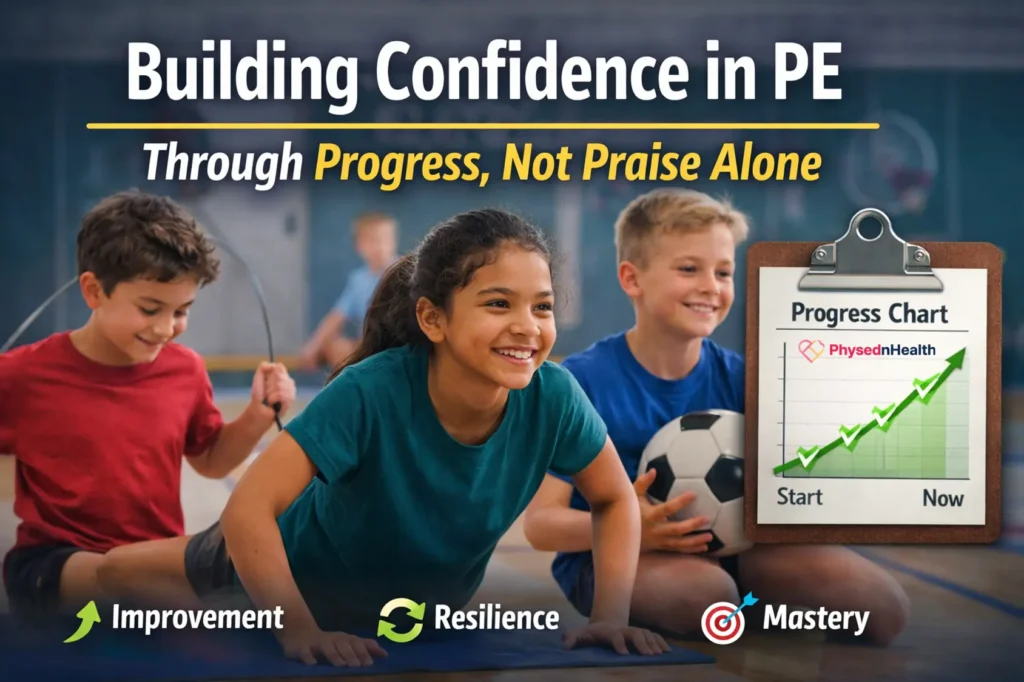
A lot of students hear praise in PE. “Nice job.” “You’ve got this.” “Good effort.” That matters—but praise by itself is usually not enough to build lasting confidence. What builds real confidence is progress students can feel and see. In psychology, this is close to self-efficacy: a student’s belief that they can successfully perform a specific task. Self-efficacy grows from several sources, including mastery experiences, models, verbal persuasion, and emotional state. In school settings, students also persist more and process learning more deeply when they adopt mastery goals—focused on improvement and learning—rather than performance goals centered on proving ability (NCBI). That distinction matters in PE. If a student thinks confidence means “I am naturally good at this,” then confidence becomes fragile. One missed catch, one slow lap, one awkward skill attempt, and it disappears. But if a student learns that confidence comes from improving, adjusting, and recovering from mistakes, then confidence becomes more durable. CASEL’s school guidance notes that believing “I can succeed at this” creates a positive loop between hard work, mastery, and increased self-efficacy, and it recommends framing mistakes as learning opportunities rather than threats (Casel Shcoolguide) . What confidence in PE actually looks like Confidence in PE is not the same as being the best athlete in class. A confident student might still be developing skill. They might still be slower, less coordinated, or newer to movement experiences than their peers. What changes is that they begin to believe they can improve, try again, and handle challenge without shutting down. SHAPE America’s PE/SEL crosswalk ties physical education directly to self-awareness, self-management, a well-grounded sense of confidence, optimism, and a growth mindset. SHAPE also frames PE as part of students’ holistic development, not just skill display (SHAPE). That is why empty encouragement can only take students so far. Verbal persuasion is one source of self-efficacy, but it works best when it is paired with actual experiences of progress. When students have evidence that they are getting better, teacher encouragement lands differently because it feels true. Why progress matters more than praise alone Praise tells students, “Someone believes in me.” Progress tells students, “I have proof.” That proof is powerful. The APA reports that mastery-oriented learning supports persistence and deeper processing, and it has also highlighted evidence that monitoring progress toward goals more frequently increases the likelihood of reaching them. In PE, that means confidence grows when students can compare where they started to where they are now—not just when they hear positive words after a performance. This is one reason visible improvement matters so much in physical education. A student who can see that they added two push-ups, improved their dribbling control, or participated more consistently over time is not relying on borrowed confidence from the teacher. They are building earned confidence through experience. SHAPE America’s essential components document emphasizes that PE assessment should track student progress over a learning sequence using preassessment, formative assessment, and summative assessment—not just isolated final outcomes. Why mistakes are part of confidence-building Many students think confidence means never messing up. In reality, confidence gets stronger when students learn that mistakes are survivable, normal, and useful. CASEL explicitly recommends honoring productive struggle and framing mistakes as learning opportunities. Its guidance also notes that thoughtful scaffolding and high expectations help students stretch safely without feeling abandoned. That is especially important in PE because mistakes are often public. A missed serve, a poor throw, or a failed attempt can feel highly visible. If students interpret those moments as proof that they “just aren’t good at PE,” confidence drops. If they interpret them as information—what to adjust next, what cue to focus on, what part is improving—confidence can actually grow after mistakes instead of collapsing because of them. That is a practical application of mastery-oriented motivation and growth-focused feedback. What this looks like in PE In PE, confidence grows fastest when teachers make improvement visible across more than one kind of success. A student can build confidence through: That broader view fits SHAPE America’s guidance that physical education assessment should measure progress across the learning sequence and address cognitive, affective, and psychomotor learning, not just one final performance score. So the student who goes from avoiding a task to attempting it consistently is making real progress. The student who still is not “top level” but now understands cues, self-corrects, and sticks with challenge is making real progress. The student who moves from embarrassment to effort is making real progress. And progress is what confidence can grow on. 5 ways PE teachers can build confidence through progress 1. Start with a baseline Confidence is easier to build when students know where they started. Preassessments, simple check-ins, and quick initial skill observations help create a reference point for future success. SHAPE America recommends preassessments at the start of a learning sequence, and IES describes formative assessment as a process of gathering and using evidence during instruction to facilitate further learning. 2. Make progress visible Use charts, personal best trackers, cue checklists, reflection prompts, or simple before-and-after comparisons. The APA notes that more frequent progress monitoring is linked to greater goal success, which helps explain why visible progress can be so motivating for students. 3. Give feedback that points to the next move “Good job” feels nice, but “Your plant foot was in a better position that time—try following through toward the target next” builds competence. IES describes formative assessment as creating feedback loops that allow midcourse, just-in-time adjustments to help students learn. 4. Normalize retries and revision Students build confidence when they know they will have another attempt, another rep, another chance to adjust. CASEL recommends framing mistakes as learning opportunities and supporting productive struggle rather than treating errors as failure. 5. Pair encouragement with evidence Keep praising effort and persistence—but connect that praise to something real the student is doing better. That combination matters because self-efficacy is strengthened not only by verbal persuasion but also by mastery experiences and a student’s interpretation of their own progress.
Why PE Assessment Should Measure Growth, Not Just Performance
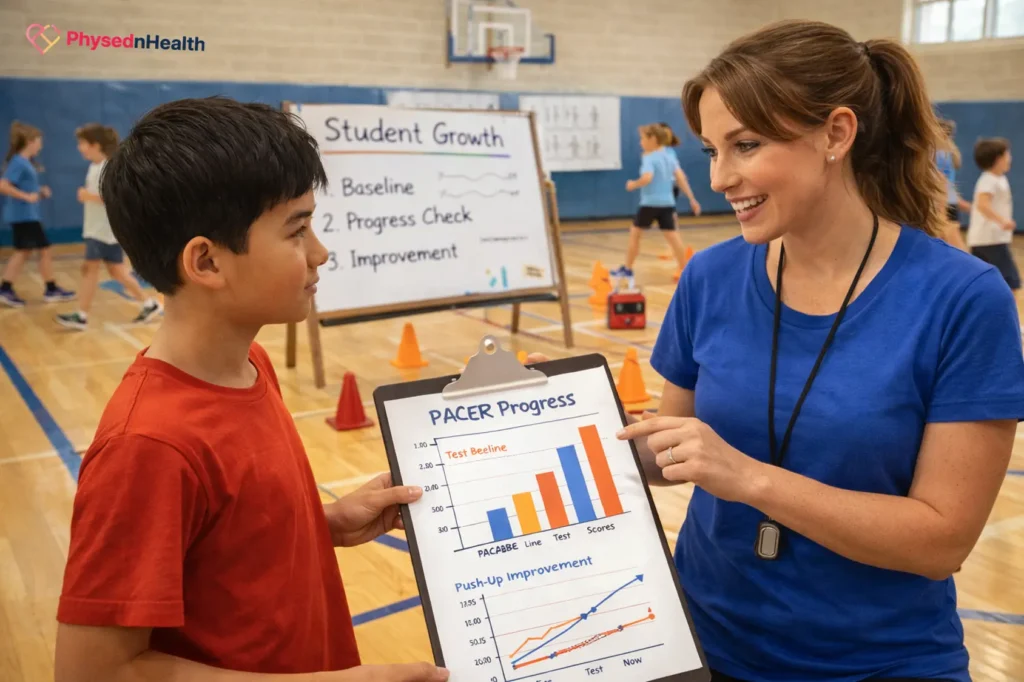
A lot of PE assessment still gets reduced to a single moment: one test, one score, one grade, one snapshot. A student runs the PACER once. Holds a plank once. Performs a skill once. Then that score becomes the story. But in physical education, that is rarely the full story. A student who starts far behind but improves steadily may be learning more, building more confidence, and developing better long-term habits than a student who begins with high performance and stays flat. SHAPE America defines student assessment in physical education as gathering evidence about achievement and making inferences about student progress, not just recording isolated outcomes. SHAPE also describes assessment in PE as including preassessments, formative assessments during instruction, and summative assessments at the end of a unit or sequence. That is why growth-based PE assessment matters. It shifts the question from “How good is this student right now?” to “How is this student progressing over time, and what does that tell us about learning?” Why one-time scores are not enough A one-time performance score can be useful. Teachers do need checkpoints. Students do need opportunities to demonstrate what they can do. But a single score does not always capture effort, improvement, confidence, understanding, or the effect of quality instruction over time. That is especially true in PE, where students enter class with very different backgrounds, confidence levels, access to activity outside school, motor skill development, and prior experiences with movement. SHAPE guidance says student assessment in physical education should align with standards-based grade-level outcomes and measure progress across the psychomotor, cognitive, and affective domains. In other words, PE is not just about the final number. It is also about what students learn, how they improve, and how they grow in skill, knowledge, and self-management. Why growth is more motivating for students There is also a motivation reason to assess growth. The American Psychological Association notes that students tend to persist more and process learning more deeply when they adopt mastery goals rather than performance goals. Mastery goals focus on improving competence and learning; performance goals focus more on proving ability relative to others. That matters in PE. When students believe success means being the fastest, strongest, or most naturally skilled person in the class, many disengage quickly. But when success includes visible improvement, personal bests, better technique, stronger habits, and progress toward goals, more students can see a path to success. Growth-based PE assessment gives students that path. It tells the student who went from 8 push-ups to 14 that the work mattered. It tells the student who still struggles with overhand throwing that cleaner form and better sequencing count. It tells the student who used to avoid class that dressing out consistently, participating more fully, and reflecting honestly are meaningful wins too. That approach fits both SHAPE’s emphasis on student progress and APA’s research-based distinction between mastery-oriented and performance-oriented motivation. What growth-based PE assessment looks like Growth-based assessment does not mean lowering standards. It means measuring student learning in a way that reflects how learning actually happens. In PE, that usually means using more than one point of evidence: That structure closely matches SHAPE America’s description of preassessment, formative assessment, and summative assessment in physical education, and it aligns with IES guidance that formative assessment is a process of gathering, interpreting, and using evidence during instruction to support further learning. Example 1: Fitness progress Imagine two students taking the PACER. Student A scores high on day one and finishes the unit with almost the same result. Student B starts much lower but improves significantly, learns how to pace effort, and can explain what cardiovascular endurance is and why it matters. If you only grade the final score, Student A may appear more successful. If you assess growth, Student B’s learning becomes visible too. A growth-based approach might look at baseline-to-final improvement, pacing strategy, recovery awareness, effort consistency, and student understanding of the fitness concept being taught. That better reflects PE’s cognitive and psychomotor goals than a single score alone. Example 2: Skill development Now think about a skill unit. A student may not reach “advanced” performance in dribbling, striking, or throwing by the end of the unit. But that same student might show clear improvement in body control, movement sequence, cue recall, and decision-making. That is learning. If assessment only rewards the polished final product, teachers miss the instructional story. If assessment captures progression, feedback, and improving execution, students are rewarded for developing competence rather than just arriving with it. SHAPE’s standards-based assessment approach and IES’s emphasis on using evidence to make midcourse instructional adjustments both support this broader view of learning. Example 3: Personal goal progress Some of the most important growth in PE is personal. A student who begins the semester avoiding participation may set a goal to engage in every warm-up. Another may aim to improve recovery habits, monitor effort more honestly, or contribute more positively in partner work. Those gains matter because PE is not only building performance. It is building self-awareness, confidence, and habits that support lifelong physical activity. SHAPE’s guidance that assessment should address cognitive, affective, and psychomotor domains supports including these kinds of goals in a strong PE assessment system. How PE teachers can shift toward growth-based assessment The shift does not have to be complicated. Start with four simple moves. 1. Use a baseline before instruction Do not make the first score the final judgment. Use it to understand starting points. 2. Add checkpoints during the unit Quick observations, skill cues, exit reflections, and mini-conferences help teachers adjust instruction and help students notice progress. That is the heart of formative assessment. 3. Measure more than the final performance Include technique, understanding, consistency, goal progress, and reflection where appropriate. That better reflects PE’s full learning goals. 4. Show students their progress Growth becomes motivating when students can actually see it. APA’s motivation guidance suggests that a mastery-oriented approach supports persistence and deeper engagement. Why this is more educationally meaningful Growth-based
The First Week Back: How PE Teachers Can Help Students Re-Regulate After Spring Break
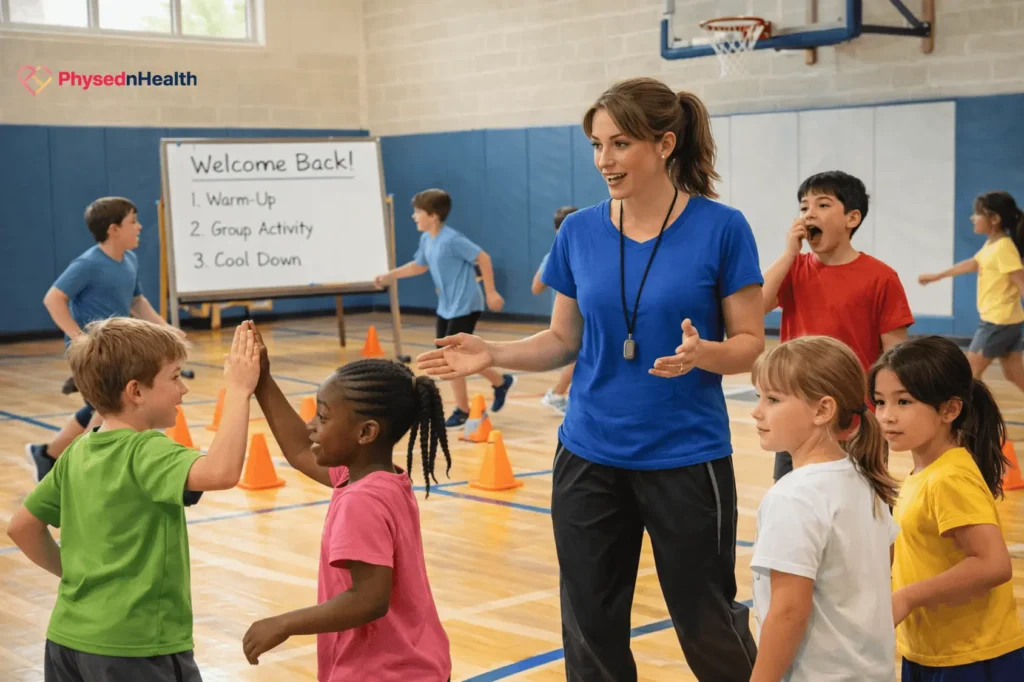
The first full week back after spring break can feel strangely uneven in PE. Some students come in loud, impulsive, and extra social. Others seem sluggish, distracted, or checked out. A few who were doing well before break suddenly look less focused, less cooperative, or less confident. That does not always mean they are being difficult. Often, it means they are still re-adjusting to school routines, expectations, and the social demands of being back in a highly visible learning space. Clear, consistent routines help students self-regulate, manage stressors, and focus on learning, and education guidance recommends revisiting expectations with refreshers after school breaks and holidays. That is exactly why PE matters so much this week. When students return from break, they do not just need instruction. They need rhythm. They need predictability. They need a chance to move, reconnect, and feel successful again. Physical activity supports attention, memory, brain health, and mood in children and adolescents, which makes PE one of the most powerful places in school to help students reset. Why students often feel “off” after spring break Spring break interrupts more than schedules. It often changes sleep, activity levels, structure, and social patterns. When students come back, they are being asked to shift quickly from freedom and inconsistency into routines, transitions, peer dynamics, and performance expectations. CASEL notes that organized, predictable routines support self-regulation, stress management, belonging, and focus. The Institute of Education Sciences also emphasizes that teachers should reteach and refresh expectations after breaks rather than assume students will simply snap back into them. In PE, that re-entry challenge can be even more obvious because the class is active, public, and fast-moving. Students are asked to transition quickly, manage equipment, work with peers, respond to feedback, and often perform in front of others. When routines feel shaky, what teachers see may look like silliness, side conversations, avoidance, or shutdown. In many cases, those behaviors are signs that students need re-regulation more than correction. That is a practical inference from the role routines and refreshed expectations play in helping students manage stress and stay engaged. What the science says PE teachers should remember this week The research-backed takeaway is simple: students do better when expectations are clear, routines are predictable, and movement is used as a support for regulation rather than treated as separate from learning. CASEL highlights that clear routines and procedures help students manage challenges and focus on learning. The IES practice guide recommends teaching expectations regularly and using refreshers after each school break and holiday. And CDC guidance notes that physical activity supports cognition, attention, memory, and mental well-being in school-aged children. That means the goal for this first week back is not to jump immediately into maximum intensity, maximum complexity, or maximum accountability. The goal is to restore the conditions that make good learning possible. 5 practical ways to help students re-regulate in PE this week 1. Reteach routines instead of assuming students remember them This is not the week to say, “They already know this.” Treat the first few classes back like a reset, not a restart from the exact same moment you left off. Review how students enter, where equipment goes, how groups are formed, what effort looks like, and how transitions happen. The IES guidance specifically recommends ongoing review of expectations and refreshers after breaks and holidays because behavior expectations work best when they are explicitly retaught, modeled, and reinforced. A quick reset script can sound like this: “Let’s take two minutes to remember what makes this class run well so we can have a better week.” That tone feels supportive, not punitive. 2. Tighten transitions before you increase complexity A lot of post-break frustration in PE starts in the transitions, not in the lesson itself. If entering the gym, getting into groups, collecting equipment, or shifting between tasks feels messy, simplify those moments first. CASEL points out that clear and consistent routines create more organized and predictable environments, which helps students self-regulate and manage stress. Including students in refining routines can also increase agency and buy-in. This week, keep transition systems visible and simple: The smoother the transitions, the calmer the class feels. 3. Start with visible wins After a break, many students need to feel successful before they are ready to feel ambitious. That means the first week back should include tasks where students can quickly experience competence: short partner challenges, skill refreshers, personal-best activities, cooperative warm-ups, or low-stakes re-entry stations. The IES guide notes that regular, predictable feedback can reinforce expectations and promote student self-reflection and self-regulation. In practical terms, that means students should leave class feeling: “I know what to do.”“I can do this.”“I’m back in it.” That is a stronger starting point than pushing immediately into performance pressure. 4. Use movement to regulate before you evaluate The first week back is not the best week to lead with your highest-pressure assessments. If students are still re-adjusting, begin with activities that help them move, breathe, connect, and settle into the rhythm of class. CDC guidance shows that physical activity supports attention, memory, mood, and overall brain health in children and adolescents. That makes a strong case for using PE this week to help students get regulated first, then gradually layer in more demanding instruction, assessment, or competitive tasks. This does not mean lowering standards. It means sequencing wisely. 5. End class with a quick reflection, not just a dismissal One of the easiest ways to rebuild self-regulation is to help students notice their own state and effort. A one-minute exit prompt can do a lot: That kind of predictable feedback loop supports self-reflection, and CASEL also notes that when students have voice in routines and practices, they are more likely to experience agency and belonging. Reflection helps students do more than participate. It helps them reset with awareness. What this means for PE teachers This week is not just about getting through the return from break. It is an opportunity. PE teachers are in a unique
Why Self-Regulation Belongs in PE
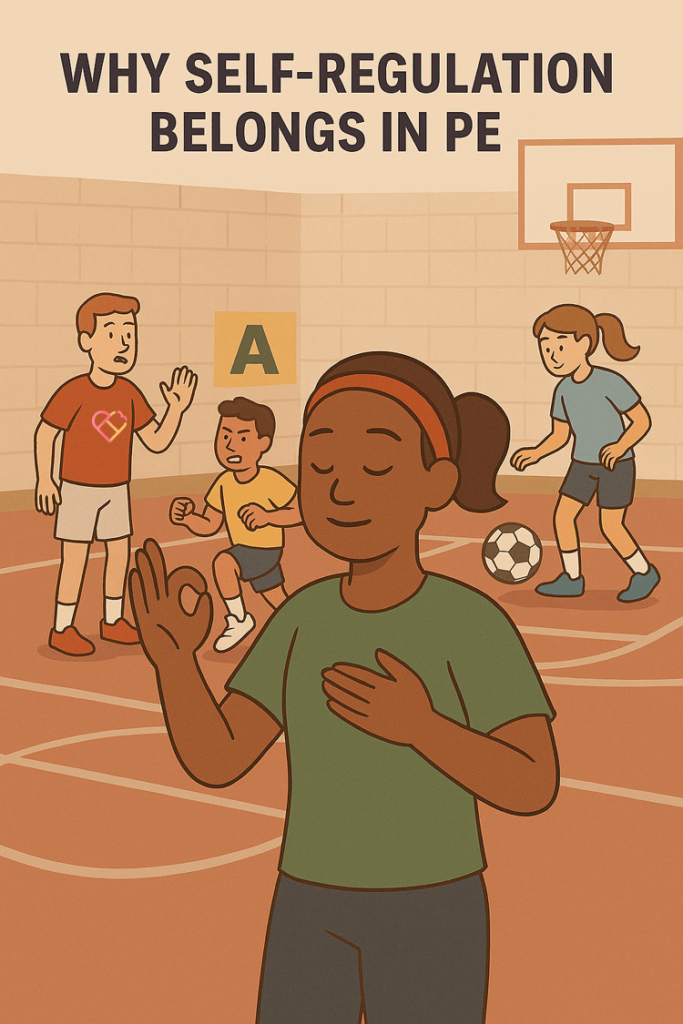
Self-regulation is the ability to manage thoughts, emotions, and behaviors so students can stay focused on goals, even under stress or excitement. In K–12 PE, self-regulation shows up when students handle a bad call, wait for a turn, or reset after losing a game and choosing to stay engaged instead of checking out. Research links stronger self-regulation with higher academic achievement and better classroom behavior, which means every rep students get in the gym can translate into gains in the classroom. Physical activity itself boosts self-regulation, especially when it is moderate-to-vigorous, enjoyable, and includes chances to practice emotional control. Science Behind Movement and Regulation Studies show that regular physical activity is associated with better emotional and behavioral regulation from ages 7–14, partly explaining why active students often do better academically. Outdoor and enjoyable movement experiences may have an even stronger impact on mental well-being and self-regulation than indoor, low-engagement activity. Social-emotional learning (SEL) programs integrated into PE have improved teamwork, self-awareness, and self-management, and reduced behavioral problems like aggression and bullying. When PE intentionally teaches SEL, students gain practical tools for recognizing emotions, pausing, and choosing pro-social behaviors during high-energy games. Everyday Routines That Teach Self-Regulation Embedding self-regulation does not require a new unit; it requires intentional routines you repeat daily. Small, predictable structures help students anticipate expectations and gradually internalize calm-down and reset strategies. Try these daily routines: Regulation Skills Embedded in PE Activities Self-regulation grows fastest when it is practiced inside meaningful, emotionally charged moments like competition, teamwork, and performance. Instead of pausing PE to “teach SEL,” layer regulation prompts into activities students already love. Use these strategies across grade bands: Making It Sustainable and Visible To make self-regulation a lasting part of PE culture, it needs to be named, noticed, and reinforced. When students hear the language consistently, they begin to use it independently with peers and in classrooms beyond the gym. Consider these implementation moves: This science-backed, routine-based approach turns everyday K–12 PE into a powerful training ground for self-regulation, helping students manage energy, emotions, and behavior wherever they go in school. Discover PhysednHealth innovative approaches to promote health and engagement in physical education. Contact us at awesome@physednhealth.com.
PE teachers parent partnership for behavior

PE teachers are uniquely positioned to influence both student behavior and how families respond to school discipline, and small shifts in how they engage parents can translate into calmer, more respectful classrooms. This post reframes parent behavior not as a barrier, but as a partnership opportunity PE can lead. Why Parent Behavior Matters for PE Parents often act as the “third rail” in school discipline: their reactions can either reinforce consequences or undermine them entirely. When parents defend misbehavior or challenge every consequence, students quickly learn that school rules are negotiable, which fuels defiance in the gym and beyond. At the same time, most families say they still want schools to reinforce core values like respect, responsibility, and effort. This tension creates a powerful opening for PE teachers to model and coach healthier responses to behavior issues. The Unique Leverage of PE Teachers PE teachers see students in motion, under stress, and in social conflict more often than many classroom teachers. That vantage point allows them to spot emerging behavior patterns and coach regulation skills before they escalate into office referrals. Because PE is highly visible and often beloved, families may be more open to hearing difficult feedback from the PE teacher who “gets” their child as an athlete or mover. Used strategically, that relationship can shift how parents talk about behavior at home. Strategy 1: Normalize Clear, Consistent Consequences Survey data show that teachers overwhelmingly believe students “aren’t scared of consequences” anymore—and that parental pushback is a major factor. When a parent immediately contests every timeout, benching, or office referral, it teaches students that limits are optional if they complain loudly enough. PE teachers can counter this by clearly teaching their behavior system to both students and parents: what the expectations are, what happens when they are broken, and how students can earn their way back through repair. Sending home a simple, visual “PE behavior roadmap” (posted in the LMS or emailed) makes your approach transparent and reduces the element of surprise that often triggers parent anger. Strategy 2: Call Home Before There’s a Problem Administrators who have reduced referrals significantly start with proactive conversations with families of students most likely to struggle with behavior. One middle school, for example, used data to identify the 20 students generating nearly half of all referrals and invited them and their parents to a positive “Strong Start” meeting before school began. PE teachers can adapt that playbook by scheduling short, strengths-focused check-ins with families of students who frequently test limits in the gym. Use these calls to share what the student does well, ask what tends to set them off, and co-create a simple plan for how you and the parent will respond the next time there is an issue. This flips the narrative from “I only call when your child is in trouble” to “We’re on the same team.” Strategy 3: Treat Parents as Advocates, Not Adversaries When parents push back, it often stems from feeling judged on their parenting rather than from disagreement about the need for good behavior. One teacher noted that parents interpret calls about misbehavior as criticism of them, which makes them defensive and less willing to collaborate. PE teachers can de-escalate by explicitly acknowledging parents’ role as their child’s biggest advocate, even when you disagree with their take. Using language like “You’re doing your job by asking hard questions; my job is to keep your child and their classmates safe” reframes the conversation as shared responsibility instead of a blame game. Strategy 4: Lead With Listening in Tough Conversations School leaders who successfully calm heated parents focus first on letting them feel heard before explaining the school’s side of the story. In one example, a principal convened a meeting with a student, parents, and teacher so the family could fully express why a comment upset their child, then gave the teacher space to clarify his intentions. PE teachers can mirror this approach when parents are upset about a behavior consequence from class. Start by asking, “Can you walk me through how your child described what happened?” and reflect back what you heard before adding your perspective. This simple sequence lowers defenses and makes it easier for parents to accept that their child still needs to repair harm. Strategy 5: Teach Parents the “School Version” of Behavior Skills More than half of teachers in a national survey said that parent instruction on how to teach school-appropriate behavior would have a “major positive impact” on student conduct. Many families genuinely don’t know what regulation, conflict resolution, or “respect” look like in a busy gym versus at home. Because behavior in PE is so concrete—lining up, taking turns, handling losing, responding to a foul—PE teachers can translate abstract SEL skills into simple scripts and routines parents can practice at home. For example, you might send a short video or handout showing how you teach students to pause, breathe, and ask for a break when frustrated instead of throwing equipment, and invite parents to rehearse that same script during family games. Strategy 6: Use Data to Focus Parent Outreach One school reduced behavior issues by mining referral data to find the small group of students driving a disproportionate share of incidents, then concentrating relationship-building on those families. PE teachers can do something similar with their own data—tracking who is repeatedly involved in conflicts, refusals, or safety violations in the gym. Sharing that data with families in a non-shaming way (“Over the last month, we’ve logged five incidents where your child walked away from directions in PE; let’s talk about what’s behind that”) keeps the conversation anchored in patterns, not personalities. It also makes it easier to measure progress as parents adjust how they respond at home. Strategy 7: Help Make School a Place Parents Want to Be When schools are only in touch to report misconduct, parents learn to associate every call or email with bad news. Administrators suggest that creating spaces where parents can meet, volunteer, or simply feel welcomed
Why PE Curriculum and Assessment Must Work Together
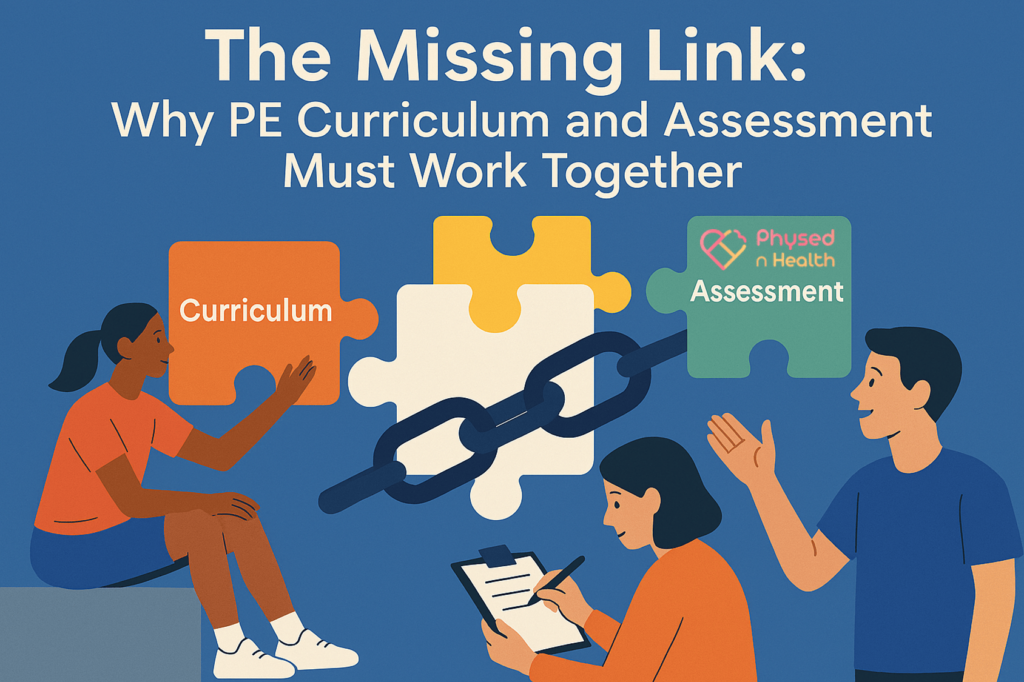
Aligning PE curriculum and assessment is not just good practice—it’s the missing link that turns physical education from “gym class” into a powerful, evidence‑based learning experience. When standards, instruction, and assessment work together, students move more, learn more, and stay active for life; when they’re misaligned, PE becomes a compliance exercise with little impact on fitness, skill, or motivation In K–12 physical education, we often treat curriculum and assessment as separate tasks: plan the units, then “test” at the end. But decades of research show that this disconnect is exactly what weakens PE’s impact on student fitness, skill, and lifelong activity habits. The real missing link is instructional alignment—the deliberate, research‑based connection between what students are supposed to learn (curriculum), how they practice it (instruction), and how we measure their progress (assessment). When PE curriculum and assessment are tightly aligned, students: In this post, we’ll break down the science behind alignment, show what it looks like in practice, and give actionable steps to close the gap in your PE program. Why Misalignment Undermines PE Too often in K–12 PE, assessment is disconnected from the curriculum in predictable ways: Research consistently shows that this misalignment leads to: In short, when assessment doesn’t reflect the curriculum, it can’t inform teaching, support learning, or demonstrate PE’s value to stakeholders. The Science of Alignment: What the Research Says High‑quality PE programs are built on constructive alignment: learning outcomes, teaching activities, and assessment tasks are designed together so that each supports the others. 1. Alignment Improves Learning and Motivation AIESEP’s international position statement on PE assessment emphasizes that meaningful learning happens when: When this alignment is in place, students are more likely to: A recent study in upper secondary PE found that students’ perceptions of assessment for learning (AfL)—clear goals, quality feedback, and student involvement—positively predicted their basic psychological needs (competence, autonomy, relatedness), which in turn predicted higher autonomous motivation, effort, and grades. This shows that when assessment is aligned with learning, it becomes a powerful motivational tool, not just a grading tool. 2. Fitness Testing Must Be Tied to Curriculum and Instruction Fitness testing in schools is most effective when it is: The National Academies’ report on fitness measures for schools stresses that: When fitness testing is aligned with curriculum and instruction, it can: 3. Assessment Informs Curriculum and Instruction Assessment data should not just sit in a gradebook; it should drive curriculum and teaching decisions. Research on data‑driven decision making in education shows that when teachers: …they see improved student outcomes across subjects. In PE, this means: What Aligned PE Looks Like in Practice An aligned PE program doesn’t require a complete overhaul; it requires intentional design and consistent routines. Here’s what it looks like across the curriculum cycle. 1. Start with Standards and Clear Learning Outcomes For each unit, begin by identifying: These outcomes become the “north star” for everything that follows: lesson plans, activities, and assessment. 2. Design Assessment Tasks That Match the Outcomes For each learning outcome, design or select assessment tasks that are a valid, feasible representation of that outcome. For example: Use a mix of assessment types: 3. Integrate Assessment into Daily Instruction Assessment should be embedded in the learning process, not a separate event at the end of a unit. Daily formative assessment in PE might include: This ongoing feedback helps students: 4. Use Data to Inform Curriculum and Instruction At the end of each unit, analyze assessment data to answer: Use this analysis to: 5 Action Steps to Align PE Curriculum and Assessment Here’s how to close the gap between curriculum and assessment in your PE program, step by step. 1. Audit Your Current Alignment For one unit, map: Ask: This audit will quickly reveal where misalignment is happening. 2. Redesign Assessment to Match Outcomes For each learning outcome, choose or create an assessment that: Start small: pick 1–2 key outcomes per unit to align first, then expand over time. 3. Embed Formative Assessment in Every Lesson Make assessment a routine part of instruction: This turns assessment into a tool for learning, not just a tool for grading. 4. Use Assessment Data to Drive Instruction After each unit: This closes the loop: assessment informs instruction, which improves learning, which is then assessed again. 5. Build Assessment Literacy Across the PE Team Assessment alignment works best when all PE teachers understand: Provide professional learning that: Conclusion: Make Alignment the Norm, Not the Exception The missing link in K–12 PE isn’t more time, more equipment, or more programs—it’s alignment between curriculum and assessment. When standards, instruction, and assessment are designed together, PE becomes a powerful, evidence‑based learning experience that: Start by auditing one unit, redesigning a few key assessments, and embedding formative assessment into daily lessons. Over time, this intentional alignment will transform PE from a disconnected series of activities into a coherent, standards‑based program that truly prepares students for a lifetime of physical activity. For more information, contact us at awesome@physednhealth.com of visit our website at https://physednhealth.com/
SHAPE 2026 Exhibit Hall Preview: What’s New, What’s Next, and How Teachers Can Use It

SHAPE 2026 in Kansas City will again make the exhibit hall the best place to find cutting-edge tools for physical education, health, and SEL. This guide highlights 25 companies to watch—organized into five key categories—plus practical ways teachers can use them. Note: Company names below are examples of the most common solution types PE and health teachers seek (assessment, curriculum, equipment, inclusion, SEL). Swap in the specific exhibitors you want to feature from the 2026 directory. Digital Assessment & Data Platforms: 5 Companies to Watch These companies are transforming how teachers collect, analyze, and communicate student fitness and skill data. Top 5 companies to watch: How PE and health teachers can use them: Standards-Based Curriculum & Instructional Content: 5 Companies to Watch These curriculum partners help teachers align PE and health programs to SHAPE America standards while saving planning time. Top 5 companies to watch: How teachers can use them: Innovative PE Equipment & Activity Solutions: 5 Companies to Watch These exhibitors bring creative equipment that solves problems like large class sizes, limited space, and mixed ability levels. Top 5 companies to watch: How teachers can use them: Inclusion, Adapted PE & Universal Design: 5 Companies to Watch These companies specialize in adaptive equipment, supports, and training to make PE accessible to all students. Top 5 companies to watch: How teachers can use them: Health Education, SEL & Whole-Child Wellness: 5 Companies to Watch These partners focus on mental health, SEL, and skills-based health education that complement PE. Top 5 companies to watch: How teachers can use them: How to Work the SHAPE 2026 Exhibit Hall Like a Pro To get real value from these top SHAPE 2026 exhibitors, treat the exhibit hall like a strategic professional learning lab. Action steps: Bringing SHAPE 2026 Exhibitors Back to Your School The real impact of SHAPE 2026 happens when you translate what you saw in Kansas City into change at your school. Try this simple implementation plan: By focusing on these top SHAPE 2026 exhibitors across assessment, curriculum, equipment, inclusion, and SEL, PE and health teachers can elevate their programs, better support the whole child, and clearly show their impact to school communities and district leaders.
Four-Platform Analysis: PhysednHealth, FitnessGram, PLT4M, and FITSTATS for K-12 Physical Education
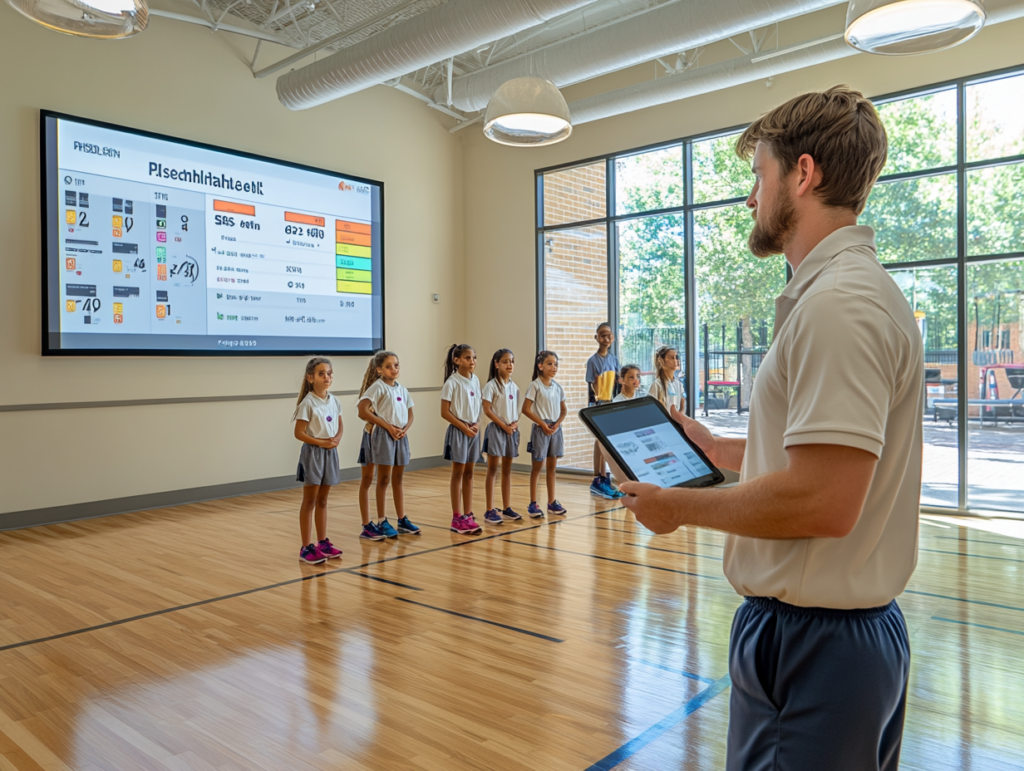
Executive Summary This analysis compares four leading K-12 physical education technology platforms across multiple dimensions including assessment capabilities, curriculum delivery, support structures, pricing, and user experience. Each platform serves distinct strategic purposes within the PE ecosystem, and schools should evaluate them based on budget, priorities, and student population needs rather than viewing them as direct competitors. Key Findings: PhysednHealth combines comprehensive assessment automation (featuring all rigorous fitness protocols equivalent to FitnessGram), extensive customization flexibility, wearable integration, 300+ exercise videos, AI-powered lesson planning, and 24/7 dedicated support at $29-$49 annually per teacher. The interface is 95% menu-driven, requiring zero technology expertise from teachers. PhysednHealth delivers exceptional value across all budget categories and represents the dominant choice for budget-conscious elementary schools and districts prioritizing automation and ease-of-use. FitnessGram provides the scientific gold standard for fitness assessment, backed by 35+ years of research validation from the Kenneth H. Cooper Institute. Its criterion-referenced Healthy Fitness Zone standards identify fitness levels associated with reduced health risk rather than ranking students against peers. FitnessGram remains the only choice if state or district mandates the Kenneth H. Cooper Institute’s standards and scientific validation framework. PLT4M differentiates through 125+ ready-to-use K-5 lessons, 1,500+ professional instructional videos, and a dedicated Success Representative support model. The platform prioritizes reducing teacher planning time through pre-vetted curriculum resources rather than AI customization. PLT4M appeals to schools prioritizing curriculum professionalization with institutional support, though it offers less customization flexibility than PhysednHealth and significantly higher cost. FITSTATS occupies a unique position by providing occupational health surveillance, injury prevention algorithms, OSTRC-H validated injury surveillance systems, and extensive wearable device integration. It serves schools with athletic populations, schools prioritizing student wellness monitoring and at-risk identification, and districts seeking advanced data analytics for health and performance tracking. For elementary schools: PhysednHealth is the optimal choice for budgets under $1,500. For budgets exceeding $2,000, schools should consider either PhysednHealth + FITSTATS (wellness-focused) or PLT4M (curriculum-focused) based on primary institutional needs. For comprehensive K-12 programs, combining all three platforms addresses assessment, instruction, and wellness simultaneously. Four-Platform Comparison: PhysednHealth, FitnessGram, PLT4M, and FITSTATS for K-12 Physical Education PhysednHealth: Comprehensive Assessment and Automation PlatformAssessment Capabilities PhysednHealth integrates all rigorous fitness assessment protocols identical to FitnessGram, including PACER, mile run, curl-ups, push-ups, and flexibility tests. PhysednHealth transcends FitnessGram’s fixed protocols by allowing teachers to create entirely custom assessment protocols, define custom scoring formulas, and integrate their own district-specific standards. This flexibility enables schools to assess students on standards not available through standard FitnessGram protocols—a capability FitnessGram does not provide. Fitness test scoring is automated instantly, transforming mandatory testing into personalized student growth reports and actionable equity insights. Data entry automation prevents manual spreadsheet tracking, saving teachers 4+ hours per assessment unit. PhysednHealth explicitly prioritizes automation, easy data collection, and flexibility when it comes to assessment[query update]. The platform’s entire architecture optimizes for reducing teacher burden in assessment administration. User-Friendliness and Interface Design PhysednHealth provides the most user-friendly interface of the four platforms[query update]. Critically, 95% of functionality is accessible through intuitive menus and dropdown options, requiring no technology expertise from teachers[query update]. This fundamental advantage differentiates PhysednHealth from PLT4M (which requires curriculum knowledge), FITSTATS (which requires administrative setup), and FitnessGram (which has a steeper learning curve). User testimonials from the official PhysednHealth website document this advantage: Teachers without technology backgrounds can immediately use PhysednHealth because the interface mimics familiar menu-based navigation analogous to Microsoft Excel dropdowns or Google Sheets sorting. Wearable Integration PhysednHealth integrates with “most popular wearables”[query update]. While specific device lists are not publicly enumerated like FITSTATS, the platform explicitly supports wearable data integration and provides real-time biofeedback on student exertion levels during class. The official 2026 roadmap mentions “wearable IoT integration” that enables “more ‘class sets’ of wearables that instantly sync to a central teacher dashboard, providing real-time biofeedback on student exertion levels during class.” This wearable capability suggests PhysednHealth is comparable to FITSTATS in functionality, with ongoing expansion of device compatibility. Ed – PhysednHealth AI: Your PE Program Co‑Teacher PhysednHealth AI is an AI-powered PE assistant that understands your actual gym, schedule, and standards. It doesn’t just spit out generic lesson plans — it builds ready‑to‑teach documents that match your space, your classes, and your paperwork needs. It Sees Your Gym and Knows Your Day Instead of planning in a vacuum, you upload a photo of your gym, outdoor court, or weight room. PhysednHealth AI analyzes the layout — court lines, hoops, open areas, equipment racks — and writes plans that reference your real space (“Set up dribble lanes along the near sideline” or “Station 3 goes in the open area between the stage and the bleachers”). You also plug in your schedule, including combined classes, half‑gym days, co‑teaching, and rotating spaces. The assistant then adapts activities, group sizes, and management cues for each specific period, whether it’s 28 third‑graders in a full gym or 52 sixth‑graders sharing space. Templates for the Whole Job, Not Just Lessons PhysednHealth AI ships with 41 templates across six categories, covering everything from teaching to admin: This means the same tool that writes your dribbling lesson can also generate a facility maintenance request or a medical alert sheet. Zero Blank Pages, Standards Built In The workflow is deliberately simple: pick a template, tap a few chips and toggles (grade, skill focus, format), optionally add a gym photo and schedule, then click Generate. In seconds you get a formatted, ready‑to‑use document you can print, share, or tweak. No long prompts, no staring at a blinking cursor. Every lesson and assessment comes aligned to SHAPE America National Standards, uses observable, measurable criteria, and applies research‑backed proficiency levels in rubrics. IEP goals and reports follow recognized frameworks, so your documentation is both teacher‑friendly and administrator‑ready. Who Gets the Most Value PhysednHealth AI is especially powerful for: In short, PhysednHealth AI turns your gym, schedule, and standards into an always‑on co‑teacher that handles the planning and paperwork, so you can focus on teaching. Standards-Based Curriculum Library: PhysednHealth provides “a comprehensive library of K-12 standards-based lesson plans, workouts, and curriculum
Why PE Is One of the Most Powerful Classrooms for Teaching Life Skills and Self‑Regulation
PE Is More Than Movement—It’s a Laboratory for Life Skills Physical Education has always been about more than games, laps, and skill drills. Today, research is catching up to what great PE teachers have known for decades: the gym is one of the most effective environments for teaching self-regulation, resilience, and emotional intelligence. Unlike traditional classrooms, PE places students in dynamic, emotionally charged situations—competition, teamwork, frustration, excitement, and rapid decision-making. These moments create natural opportunities for students to practice the skills that shape their success far beyond school. And the science behind it is compelling. The Science of Self-Regulation—and Why PE Is the Ideal Training Ground Self-regulation is the ability to manage thoughts, emotions, and behaviors in pursuit of a goal. It includes: 1. Physical Activity Strengthens the Brain Systems Responsible for Self-Regulation Research shows that moderate-to-vigorous physical activity (MVPA) enhances: These are the same neural systems students rely on to stay focused in class, solve problems, and navigate social situations. Movement increases blood flow to the prefrontal cortex—the brain’s “control center”—and releases neurochemicals that support attention, mood regulation, and learning. In other words, every rep in PE is also a rep for the brain. 2. PE Provides Real-Time Emotional Challenges Self-regulation isn’t learned through lectures—it’s learned through experience. PE naturally creates moments where students must: These are not hypothetical scenarios. They’re authentic, emotionally charged moments that mirror real life. 3. Social Interaction Builds Empathy and Self-Control Team activities require students to: These interactions strengthen social-emotional skills that transfer directly to classrooms, relationships, and future workplaces. 4. Structured PE Routines Reinforce Behavioral Regulation Warm-ups, rotations, stations, cooldowns—these predictable structures help students practice: These are foundational life skills that support academic success. Evidence-Based PE Practices That Build Self-Regulation PE teachers already use strategies that align with the science of self-regulation, including: • Goal Setting Students learn to set personal goals, monitor progress, and adjust effort—core components of self-regulation. • Reflection and Feedback Post-activity reflection helps students connect physical experiences to emotional and cognitive growth. • Choice and Autonomy Offering activity options increases intrinsic motivation and strengthens decision-making skills. • Cooperative Challenges Group tasks require communication, patience, and emotional control. • Mind-Body Integration Breathing exercises, mindfulness, and cooldowns teach students how to regulate physiological responses. When these practices are intentional and consistent, PE becomes a powerful engine for whole-child development. How PhysEdnHealth Helps Teachers Bring This Science to Life While the science is clear, the challenge for teachers has always been the same: How do we measure, track, and reinforce self-regulation in a meaningful, scalable way? That’s where PhysEdnHealth is already transforming classrooms. PhysEdnHealth supports self-regulation development by: Teachers using PhysEdnHealth report that students become more aware of their behaviors, more invested in their goals, and more capable of managing emotions during challenging activities. In other words, the platform turns the science of self-regulation into daily practice—without adding workload for teachers. The Future of PE Is Evidence-Based, Student-Centered, and Whole-Child Focused Self-regulation is one of the most important predictors of long-term success. PE is one of the most powerful places to teach it. And PhysEdnHealth is helping schools make that impact visible, measurable, and sustainable. If we want students who can focus, adapt, persevere, and thrive, we don’t need to look further than the gym. We just need the right tools to capture the growth that’s already happening. Try PhysednHealth here.
PE Teacher Decision Fatigue (And How to Fix It)
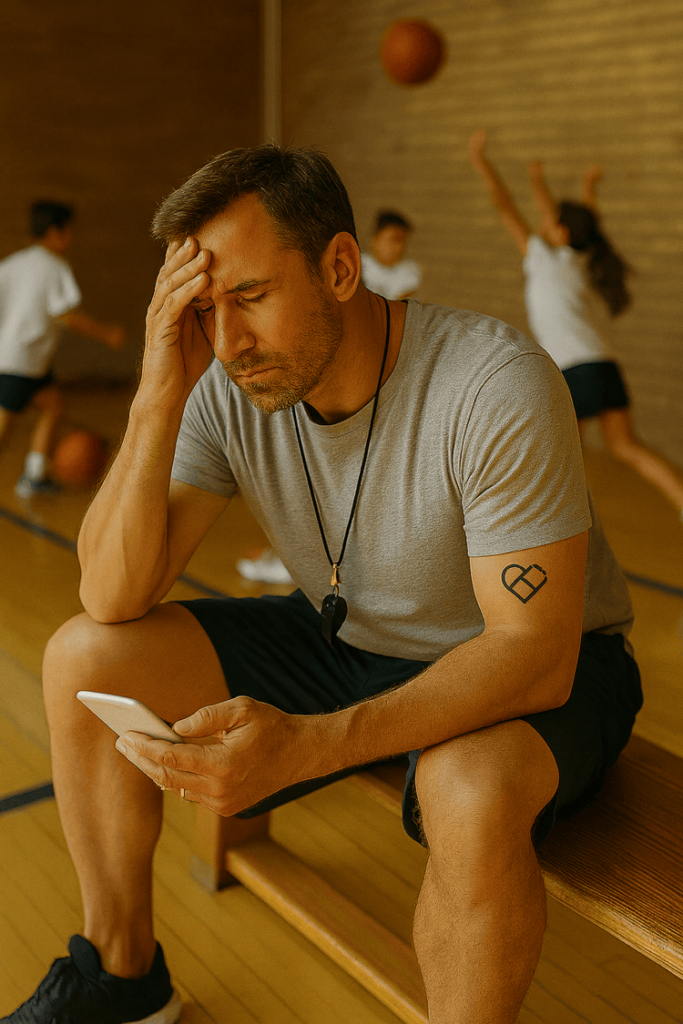
It is 2:00 PM on a Tuesday in February. You aren’t physically tired—you’ve walked 15,000 steps, which is normal for you. But you are experiencing a specific kind of brain fog. You find yourself staring at a simple email, unable to write a reply. When you get home, the question “What’s for dinner?” feels like an impossible riddle. You aren’t just “burnt out.” You are suffering from a documented psychological phenomenon called Decision Fatigue. Following up on our discussion about the Science of Rest, this week we are looking at why the middle of the semester feels so heavy, and how automating your workflow is the only way to survive it. The Science: Your Brain is a Battery Social psychologist Roy Baumeister coined the term “Ego Depletion” to describe how willpower and decision-making draw from the same limited energy reserve. Think of your brain like a phone battery. Every decision you make drains a percentage. Research estimates that teachers make over 1,500 educational decisions per day—more than air traffic controllers. By the final period, your “battery” is empty. This is why you feel irritable, impulsive, or completely numb by the end of the day. PE Teachers Have it Worse While a math teacher manages 30 students in a grid, a PE teacher manages 60+ moving targets in an echo chamber. The sheer volume of micro-decisions (safety checks, behavior management, equipment logistics) accelerates the drain. The solution isn’t to “try harder.” It is to make fewer decisions. Here is how to use technology to offload the cognitive load, so you can save your energy for the students. 1. Offload Planning to AI The Decision: “What activity fits standard S1.M6.7 with only 20 balls?” This requires high-level cognitive processing. Stop doing it from scratch every Sunday. 2. Standardize Grading with Rubrics The Decision: “Is that a B or an A? Did they really try?” Subjective grading is a massive energy leak. Trying to intuitively judge 50 students creates enormous anxiety (for you and them). 3. Delegate Logistics to Zones The Decision: “Who goes where? How do I split these groups?” Managing logistics for 80 students is chaos engineering. Protect Your “Executive Function” Your value as a teacher comes from your ability to connect, inspire, and keep students safe. It does not come from your ability to invent warm-up drills from scratch every morning. By automating the mundane decisions, you protect your Executive Function for the moments that truly matter. Stop wasting brain power on paperwork. Let our AI handle the planning and grading so you can handle the teaching. Try the AI Lesson Planner | Build a Dynamic Rubric