
The First Week Back: How PE Teachers Can Help Students Re-Regulate After Spring Break
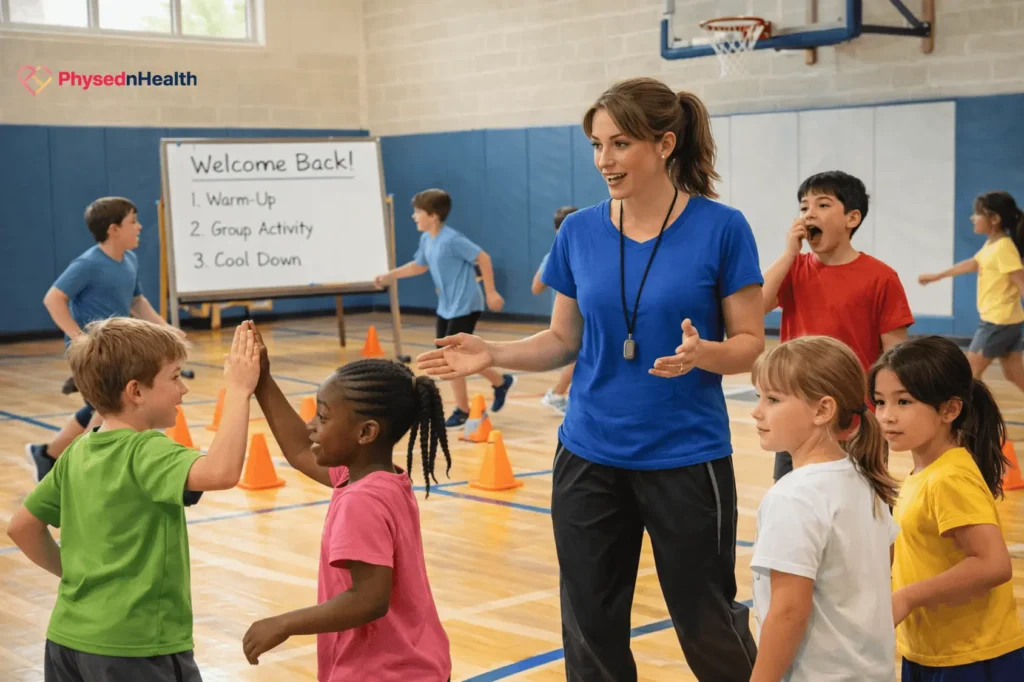
The first full week back after spring break can feel strangely uneven in PE. Some students come in loud, impulsive, and extra social. Others seem sluggish, distracted, or checked out. A few who were doing well before break suddenly look less focused, less cooperative, or less confident. That does not always mean they are being difficult. Often, it means they are still re-adjusting to school routines, expectations, and the social demands of being back in a highly visible learning space. Clear, consistent routines help students self-regulate, manage stressors, and focus on learning, and education guidance recommends revisiting expectations with refreshers after school breaks and holidays. That is exactly why PE matters so much this week. When students return from break, they do not just need instruction. They need rhythm. They need predictability. They need a chance to move, reconnect, and feel successful again. Physical activity supports attention, memory, brain health, and mood in children and adolescents, which makes PE one of the most powerful places in school to help students reset. Why students often feel “off” after spring break Spring break interrupts more than schedules. It often changes sleep, activity levels, structure, and social patterns. When students come back, they are being asked to shift quickly from freedom and inconsistency into routines, transitions, peer dynamics, and performance expectations. CASEL notes that organized, predictable routines support self-regulation, stress management, belonging, and focus. The Institute of Education Sciences also emphasizes that teachers should reteach and refresh expectations after breaks rather than assume students will simply snap back into them. In PE, that re-entry challenge can be even more obvious because the class is active, public, and fast-moving. Students are asked to transition quickly, manage equipment, work with peers, respond to feedback, and often perform in front of others. When routines feel shaky, what teachers see may look like silliness, side conversations, avoidance, or shutdown. In many cases, those behaviors are signs that students need re-regulation more than correction. That is a practical inference from the role routines and refreshed expectations play in helping students manage stress and stay engaged. What the science says PE teachers should remember this week The research-backed takeaway is simple: students do better when expectations are clear, routines are predictable, and movement is used as a support for regulation rather than treated as separate from learning. CASEL highlights that clear routines and procedures help students manage challenges and focus on learning. The IES practice guide recommends teaching expectations regularly and using refreshers after each school break and holiday. And CDC guidance notes that physical activity supports cognition, attention, memory, and mental well-being in school-aged children. That means the goal for this first week back is not to jump immediately into maximum intensity, maximum complexity, or maximum accountability. The goal is to restore the conditions that make good learning possible. 5 practical ways to help students re-regulate in PE this week 1. Reteach routines instead of assuming students remember them This is not the week to say, “They already know this.” Treat the first few classes back like a reset, not a restart from the exact same moment you left off. Review how students enter, where equipment goes, how groups are formed, what effort looks like, and how transitions happen. The IES guidance specifically recommends ongoing review of expectations and refreshers after breaks and holidays because behavior expectations work best when they are explicitly retaught, modeled, and reinforced. A quick reset script can sound like this: “Let’s take two minutes to remember what makes this class run well so we can have a better week.” That tone feels supportive, not punitive. 2. Tighten transitions before you increase complexity A lot of post-break frustration in PE starts in the transitions, not in the lesson itself. If entering the gym, getting into groups, collecting equipment, or shifting between tasks feels messy, simplify those moments first. CASEL points out that clear and consistent routines create more organized and predictable environments, which helps students self-regulate and manage stress. Including students in refining routines can also increase agency and buy-in. This week, keep transition systems visible and simple: The smoother the transitions, the calmer the class feels. 3. Start with visible wins After a break, many students need to feel successful before they are ready to feel ambitious. That means the first week back should include tasks where students can quickly experience competence: short partner challenges, skill refreshers, personal-best activities, cooperative warm-ups, or low-stakes re-entry stations. The IES guide notes that regular, predictable feedback can reinforce expectations and promote student self-reflection and self-regulation. In practical terms, that means students should leave class feeling: “I know what to do.”“I can do this.”“I’m back in it.” That is a stronger starting point than pushing immediately into performance pressure. 4. Use movement to regulate before you evaluate The first week back is not the best week to lead with your highest-pressure assessments. If students are still re-adjusting, begin with activities that help them move, breathe, connect, and settle into the rhythm of class. CDC guidance shows that physical activity supports attention, memory, mood, and overall brain health in children and adolescents. That makes a strong case for using PE this week to help students get regulated first, then gradually layer in more demanding instruction, assessment, or competitive tasks. This does not mean lowering standards. It means sequencing wisely. 5. End class with a quick reflection, not just a dismissal One of the easiest ways to rebuild self-regulation is to help students notice their own state and effort. A one-minute exit prompt can do a lot: That kind of predictable feedback loop supports self-reflection, and CASEL also notes that when students have voice in routines and practices, they are more likely to experience agency and belonging. Reflection helps students do more than participate. It helps them reset with awareness. What this means for PE teachers This week is not just about getting through the return from break. It is an opportunity. PE teachers are in a unique