
Why PE Curriculum and Assessment Must Work Together
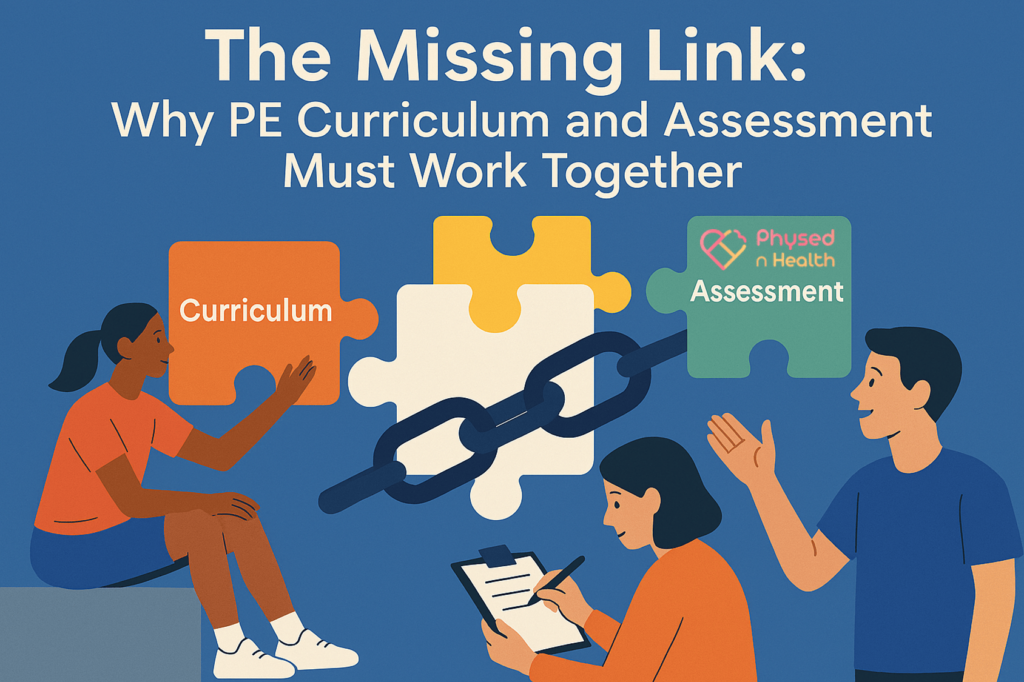
Aligning PE curriculum and assessment is not just good practice—it’s the missing link that turns physical education from “gym class” into a powerful, evidence‑based learning experience. When standards, instruction, and assessment work together, students move more, learn more, and stay active for life; when they’re misaligned, PE becomes a compliance exercise with little impact on fitness, skill, or motivation In K–12 physical education, we often treat curriculum and assessment as separate tasks: plan the units, then “test” at the end. But decades of research show that this disconnect is exactly what weakens PE’s impact on student fitness, skill, and lifelong activity habits. The real missing link is instructional alignment—the deliberate, research‑based connection between what students are supposed to learn (curriculum), how they practice it (instruction), and how we measure their progress (assessment). When PE curriculum and assessment are tightly aligned, students: In this post, we’ll break down the science behind alignment, show what it looks like in practice, and give actionable steps to close the gap in your PE program. Why Misalignment Undermines PE Too often in K–12 PE, assessment is disconnected from the curriculum in predictable ways: Research consistently shows that this misalignment leads to: In short, when assessment doesn’t reflect the curriculum, it can’t inform teaching, support learning, or demonstrate PE’s value to stakeholders. The Science of Alignment: What the Research Says High‑quality PE programs are built on constructive alignment: learning outcomes, teaching activities, and assessment tasks are designed together so that each supports the others. 1. Alignment Improves Learning and Motivation AIESEP’s international position statement on PE assessment emphasizes that meaningful learning happens when: When this alignment is in place, students are more likely to: A recent study in upper secondary PE found that students’ perceptions of assessment for learning (AfL)—clear goals, quality feedback, and student involvement—positively predicted their basic psychological needs (competence, autonomy, relatedness), which in turn predicted higher autonomous motivation, effort, and grades. This shows that when assessment is aligned with learning, it becomes a powerful motivational tool, not just a grading tool. 2. Fitness Testing Must Be Tied to Curriculum and Instruction Fitness testing in schools is most effective when it is: The National Academies’ report on fitness measures for schools stresses that: When fitness testing is aligned with curriculum and instruction, it can: 3. Assessment Informs Curriculum and Instruction Assessment data should not just sit in a gradebook; it should drive curriculum and teaching decisions. Research on data‑driven decision making in education shows that when teachers: …they see improved student outcomes across subjects. In PE, this means: What Aligned PE Looks Like in Practice An aligned PE program doesn’t require a complete overhaul; it requires intentional design and consistent routines. Here’s what it looks like across the curriculum cycle. 1. Start with Standards and Clear Learning Outcomes For each unit, begin by identifying: These outcomes become the “north star” for everything that follows: lesson plans, activities, and assessment. 2. Design Assessment Tasks That Match the Outcomes For each learning outcome, design or select assessment tasks that are a valid, feasible representation of that outcome. For example: Use a mix of assessment types: 3. Integrate Assessment into Daily Instruction Assessment should be embedded in the learning process, not a separate event at the end of a unit. Daily formative assessment in PE might include: This ongoing feedback helps students: 4. Use Data to Inform Curriculum and Instruction At the end of each unit, analyze assessment data to answer: Use this analysis to: 5 Action Steps to Align PE Curriculum and Assessment Here’s how to close the gap between curriculum and assessment in your PE program, step by step. 1. Audit Your Current Alignment For one unit, map: Ask: This audit will quickly reveal where misalignment is happening. 2. Redesign Assessment to Match Outcomes For each learning outcome, choose or create an assessment that: Start small: pick 1–2 key outcomes per unit to align first, then expand over time. 3. Embed Formative Assessment in Every Lesson Make assessment a routine part of instruction: This turns assessment into a tool for learning, not just a tool for grading. 4. Use Assessment Data to Drive Instruction After each unit: This closes the loop: assessment informs instruction, which improves learning, which is then assessed again. 5. Build Assessment Literacy Across the PE Team Assessment alignment works best when all PE teachers understand: Provide professional learning that: Conclusion: Make Alignment the Norm, Not the Exception The missing link in K–12 PE isn’t more time, more equipment, or more programs—it’s alignment between curriculum and assessment. When standards, instruction, and assessment are designed together, PE becomes a powerful, evidence‑based learning experience that: Start by auditing one unit, redesigning a few key assessments, and embedding formative assessment into daily lessons. Over time, this intentional alignment will transform PE from a disconnected series of activities into a coherent, standards‑based program that truly prepares students for a lifetime of physical activity. For more information, contact us at awesome@physednhealth.com of visit our website at https://physednhealth.com/