
Four-Platform Analysis: PhysednHealth, FitnessGram, PLT4M, and FITSTATS for K-12 Physical Education
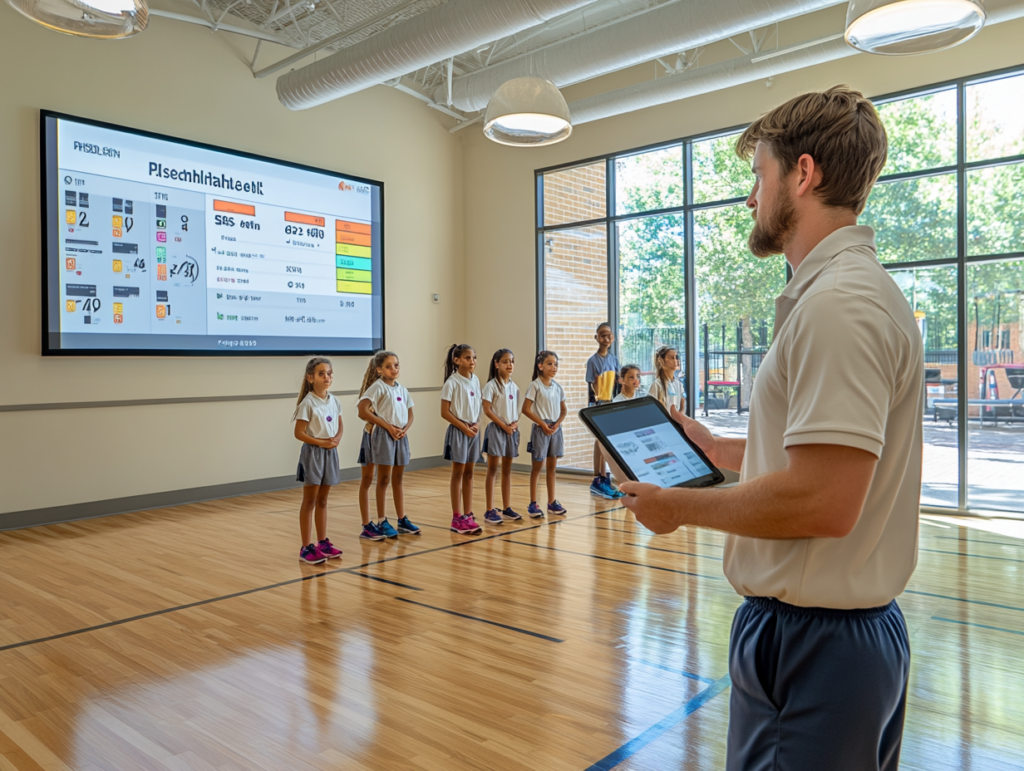
Executive Summary This analysis compares four leading K-12 physical education technology platforms across multiple dimensions including assessment capabilities, curriculum delivery, support structures, pricing, and user experience. Each platform serves distinct strategic purposes within the PE ecosystem, and schools should evaluate them based on budget, priorities, and student population needs rather than viewing them as direct competitors. Key Findings: PhysednHealth combines comprehensive assessment automation (featuring all rigorous fitness protocols equivalent to FitnessGram), extensive customization flexibility, wearable integration, 300+ exercise videos, AI-powered lesson planning, and 24/7 dedicated support at $29-$49 annually per teacher. The interface is 95% menu-driven, requiring zero technology expertise from teachers. PhysednHealth delivers exceptional value across all budget categories and represents the dominant choice for budget-conscious elementary schools and districts prioritizing automation and ease-of-use. FitnessGram provides the scientific gold standard for fitness assessment, backed by 35+ years of research validation from the Kenneth H. Cooper Institute. Its criterion-referenced Healthy Fitness Zone standards identify fitness levels associated with reduced health risk rather than ranking students against peers. FitnessGram remains the only choice if state or district mandates the Kenneth H. Cooper Institute’s standards and scientific validation framework. PLT4M differentiates through 125+ ready-to-use K-5 lessons, 1,500+ professional instructional videos, and a dedicated Success Representative support model. The platform prioritizes reducing teacher planning time through pre-vetted curriculum resources rather than AI customization. PLT4M appeals to schools prioritizing curriculum professionalization with institutional support, though it offers less customization flexibility than PhysednHealth and significantly higher cost. FITSTATS occupies a unique position by providing occupational health surveillance, injury prevention algorithms, OSTRC-H validated injury surveillance systems, and extensive wearable device integration. It serves schools with athletic populations, schools prioritizing student wellness monitoring and at-risk identification, and districts seeking advanced data analytics for health and performance tracking. For elementary schools: PhysednHealth is the optimal choice for budgets under $1,500. For budgets exceeding $2,000, schools should consider either PhysednHealth + FITSTATS (wellness-focused) or PLT4M (curriculum-focused) based on primary institutional needs. For comprehensive K-12 programs, combining all three platforms addresses assessment, instruction, and wellness simultaneously. Four-Platform Comparison: PhysednHealth, FitnessGram, PLT4M, and FITSTATS for K-12 Physical Education PhysednHealth: Comprehensive Assessment and Automation PlatformAssessment Capabilities PhysednHealth integrates all rigorous fitness assessment protocols identical to FitnessGram, including PACER, mile run, curl-ups, push-ups, and flexibility tests. PhysednHealth transcends FitnessGram’s fixed protocols by allowing teachers to create entirely custom assessment protocols, define custom scoring formulas, and integrate their own district-specific standards. This flexibility enables schools to assess students on standards not available through standard FitnessGram protocols—a capability FitnessGram does not provide. Fitness test scoring is automated instantly, transforming mandatory testing into personalized student growth reports and actionable equity insights. Data entry automation prevents manual spreadsheet tracking, saving teachers 4+ hours per assessment unit. PhysednHealth explicitly prioritizes automation, easy data collection, and flexibility when it comes to assessment[query update]. The platform’s entire architecture optimizes for reducing teacher burden in assessment administration. User-Friendliness and Interface Design PhysednHealth provides the most user-friendly interface of the four platforms[query update]. Critically, 95% of functionality is accessible through intuitive menus and dropdown options, requiring no technology expertise from teachers[query update]. This fundamental advantage differentiates PhysednHealth from PLT4M (which requires curriculum knowledge), FITSTATS (which requires administrative setup), and FitnessGram (which has a steeper learning curve). User testimonials from the official PhysednHealth website document this advantage: Teachers without technology backgrounds can immediately use PhysednHealth because the interface mimics familiar menu-based navigation analogous to Microsoft Excel dropdowns or Google Sheets sorting. Wearable Integration PhysednHealth integrates with “most popular wearables”[query update]. While specific device lists are not publicly enumerated like FITSTATS, the platform explicitly supports wearable data integration and provides real-time biofeedback on student exertion levels during class. The official 2026 roadmap mentions “wearable IoT integration” that enables “more ‘class sets’ of wearables that instantly sync to a central teacher dashboard, providing real-time biofeedback on student exertion levels during class.” This wearable capability suggests PhysednHealth is comparable to FITSTATS in functionality, with ongoing expansion of device compatibility. Ed – PhysednHealth AI: Your PE Program Co‑Teacher PhysednHealth AI is an AI-powered PE assistant that understands your actual gym, schedule, and standards. It doesn’t just spit out generic lesson plans — it builds ready‑to‑teach documents that match your space, your classes, and your paperwork needs. It Sees Your Gym and Knows Your Day Instead of planning in a vacuum, you upload a photo of your gym, outdoor court, or weight room. PhysednHealth AI analyzes the layout — court lines, hoops, open areas, equipment racks — and writes plans that reference your real space (“Set up dribble lanes along the near sideline” or “Station 3 goes in the open area between the stage and the bleachers”). You also plug in your schedule, including combined classes, half‑gym days, co‑teaching, and rotating spaces. The assistant then adapts activities, group sizes, and management cues for each specific period, whether it’s 28 third‑graders in a full gym or 52 sixth‑graders sharing space. Templates for the Whole Job, Not Just Lessons PhysednHealth AI ships with 41 templates across six categories, covering everything from teaching to admin: This means the same tool that writes your dribbling lesson can also generate a facility maintenance request or a medical alert sheet. Zero Blank Pages, Standards Built In The workflow is deliberately simple: pick a template, tap a few chips and toggles (grade, skill focus, format), optionally add a gym photo and schedule, then click Generate. In seconds you get a formatted, ready‑to‑use document you can print, share, or tweak. No long prompts, no staring at a blinking cursor. Every lesson and assessment comes aligned to SHAPE America National Standards, uses observable, measurable criteria, and applies research‑backed proficiency levels in rubrics. IEP goals and reports follow recognized frameworks, so your documentation is both teacher‑friendly and administrator‑ready. Who Gets the Most Value PhysednHealth AI is especially powerful for: In short, PhysednHealth AI turns your gym, schedule, and standards into an always‑on co‑teacher that handles the planning and paperwork, so you can focus on teaching. Standards-Based Curriculum Library: PhysednHealth provides “a comprehensive library of K-12 standards-based lesson plans, workouts, and curriculum