
Exercise and Mental Health in the Classroom – A Teacher’s Guide
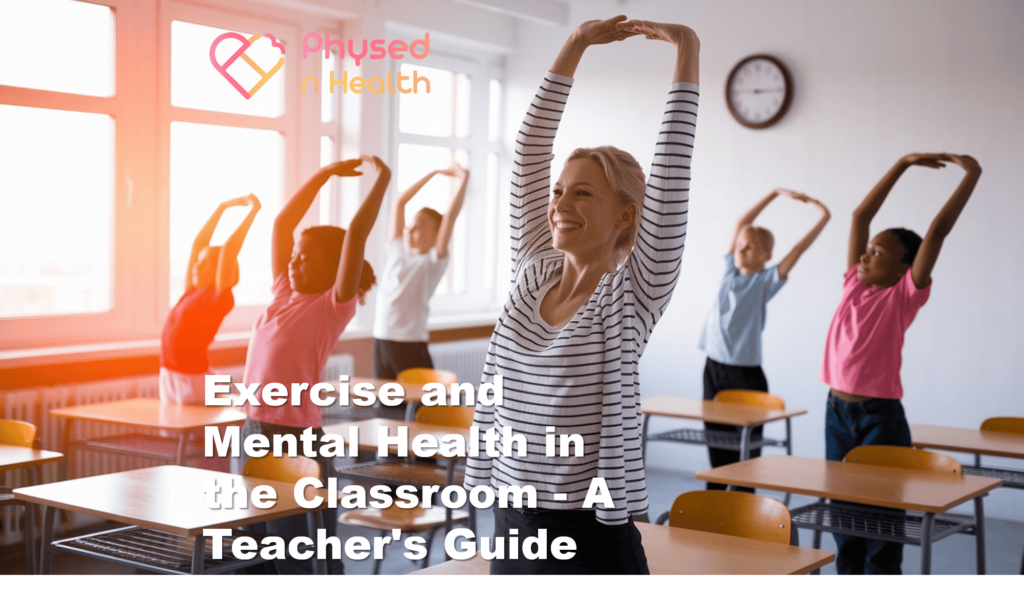
“The hum in Ms. Davis’s classroom wasn’t the productive buzz of engaged learning. It was the restless energy of students struggling to focus, their shoulders slumped, their gazes drifting. Ms. Davis, like many dedicated educators, felt the weight of her students’ challenges. Is this familiar in your classroom? You’re more than an educator; you’re a vital support for your students’ holistic growth. And right now, student well-being demands our attention more than ever. But imagine having a powerful, research-backed tool to combat distraction, reduce stress, and cultivate a more positive learning environment. That tool is exercise, and this guide is your roadmap to integrating exercise and mental health in the classroom. We’ll explore the science connecting movement and well-being, equip you with practical classroom strategies, and even offer a quiz to check your understanding. Let’s transform your classroom into a space where students thrive, both academically and emotionally.” The Science of Sweat: The Power of Exercise for Mental Health in the Classroom “We know physical activity benefits the body, but its effects on the mind are equally profound, especially within the classroom setting. Here’s why integrating exercise and mental health in the classroom is so important: A Tidbit You Probably Didn’t Know: Here’s a fact about exercise and mental health in the classroom that might surprise you: Research indicates that even brief “micro-bouts” of exercise (think 30-60 seconds of activity) can significantly enhance focus and decrease disruptive behavior. It’s about consistent integration, not just occasional fitness sessions! Real Stories, Real Impact: Exercise and Mental Health in Action “I was hesitant,” shares Mr. Chen, a middle school science teacher. “But after incorporating short exercise and mental health breaks into my lessons, the change was remarkable. Students were more engaged, less restless, and our classroom became a more positive space. One student shared that these breaks helped him manage test anxiety.” Ms. Lee, an elementary school educator, recounts a powerful experience: “I had a student who was very shy and struggled socially. Through dance activities, she found a way to express herself and connect with her peers. Her confidence soared. It was a beautiful example of exercise and mental health working together.” Empathy at the Core: Supporting Well-being Through Exercise and Mental Health in the Classroom “We recognize the demands on educators: full schedules, diverse learners, and the constant need to do more. It’s easy for student well-being to become secondary. That’s why these strategies for exercise and mental health in the classroom are designed for seamless integration. It’s about enhancing your teaching, not adding to your burden. Small, consistent actions can profoundly impact a student’s life.” Actionable Strategies: Integrating Exercise and Mental Health in Your Classroom Ready to prioritize exercise and mental health in the classroom? Here are effective strategies: Join the 7-Day Classroom Movement Challenge: Prioritize Exercise and Mental Health! Want to experience the benefits of exercise and mental health in the classroom firsthand? Join our 7-Day Challenge! Download our free guide with daily activities and a progress tracker. Share your journey using #MoveForMentalHealth and inspire others! Test Your Knowledge: Exercise & Mental Health in the Classroom Quiz How much do you know about the connection between physical activity and mental wellbeing? Take this quick quiz to find out and discover strategies you can apply in your classroom! The Quiz 1. Regular physical activity has been shown to reduce symptoms of: 2. How much moderate physical activity is recommended for children and adolescents each day? 3. Which of these is NOT a proven mental health benefit of regular exercise? 4. Brief “movement breaks” during class time have been shown to: 5. Which type of physical activity has been specifically linked to reduced anxiety in students? 6. What percentage of brain-derived neurotrophic factor (BDNF), which supports brain health, increases after exercise? 7. How quickly can exercise begin to have a positive effect on mood? 8. Incorporating physical activity into your teaching can help students with: Answer Key How Did You Score? 7-8 correct: Amazing job! You’re well-informed about the exercise-mental health connection and likely already implementing movement in your classroom. 5-6 correct: Good knowledge base! You understand the basics but might benefit from learning more specific strategies. 3-4 correct: You’re on your way! Consider exploring more resources about integrating physical activity into your teaching practice. 0-2 correct: There’s room to grow! The good news is that even small changes to incorporate movement can make a big difference for your students. Champion Exercise and Mental Health in Your Classroom “You have the power to transform your students’ lives. By prioritizing movement and well-being, you can create a classroom where every student thrives. Begin today. Start small, stay consistent, and celebrate progress. Together, let’s make exercise and mental health a cornerstone of every classroom! Share this guide, join the 7-Day Challenge, and tell us in the comments how you’re integrating exercise and mental health in your classroom!“ Lesson Plan: Movement and Mood Boosters Subject: Health/Physical Education (Adaptable for other subjects) Grade Level: 3-5 (Adaptable for younger or older students) Objective: Students will understand the connection between physical activity and mental well-being, participate in various movement activities, and reflect on their personal experiences. Materials: Procedure: Introduction (10 minutes): Movement Activities (25 minutes): Warm-up (5 minutes): Activity 1: “Mood-Boosting Moves” (10 minutes): Activity 2: “Mindful Movement” (10 minutes): Reflection and Discussion (15 minutes): Wrap-up (5 minutes): Inclusivity Considerations: Standards Alignment (SHAPE America, 2024): Assessment Rubric: Criteria 4 – Excellent 3 – Good 2 – Developing 1 – Needs Improvement Participation Fully engaged in all activities with enthusiasm. Actively participates but with some hesitation. Participates but needs reminders. Limited participation despite encouragement. Movement Skills Demonstrates strong motor skills and follows directions well. Uses appropriate movements with minor errors. Needs support to complete movements correctly. Struggles with movement and needs frequent guidance. Social Interaction Encourages peers, communicates positively, and works well with others. Generally positive and cooperative. Occasionally disengaged or off-task. Does not interact positively or is disruptive. Reflection Thoughtfully explains the connection between movement and