
Zero Hour PE: Transforming Academic Performance Through Pre-School Physical Activity
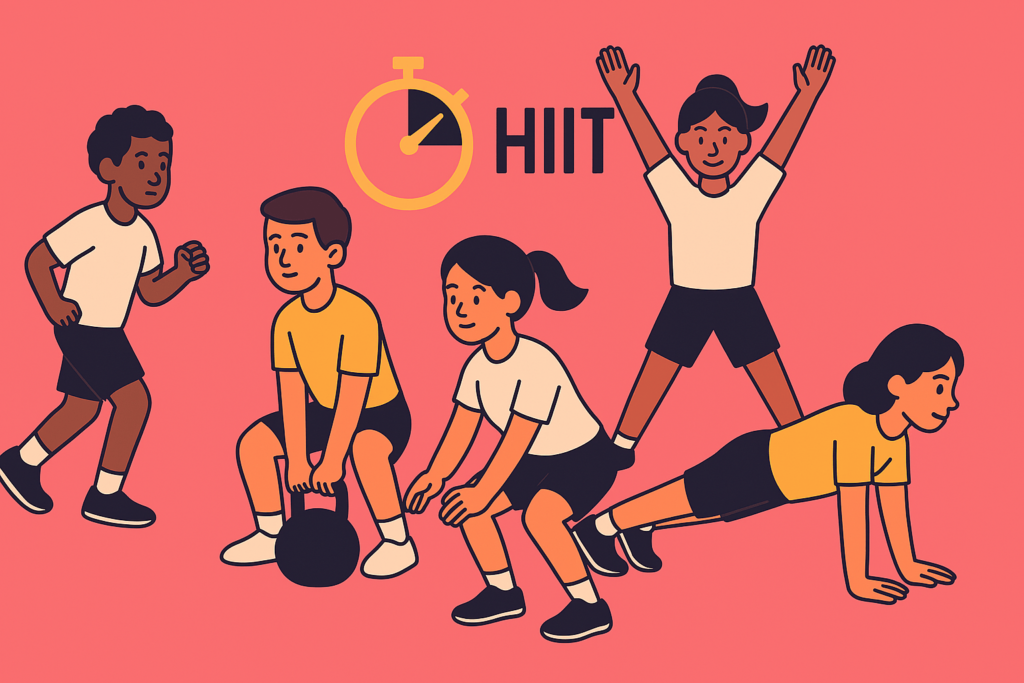
Transform your response to life’s challenges in just 10 minutes a day! The integration of physical activity into the school day has shown remarkable potential for enhancing both physical fitness and academic performance. A groundbreaking educational experiment called “Zero Hour PE” conducted in Naperville, Illinois has demonstrated extraordinary results by scheduling workout sessions before academic classes, transforming 19,000 students into some of the fittest and academically highest-performing students in the nation. This comprehensive analysis examines the Zero Hour PE program, its scientific basis, documented outcomes, and provides detailed strategies for schools and physical education teachers looking to implement similar approaches. The evidence clearly indicates that strategic implementation of high-intensity morning exercise programs can significantly improve cognitive function, academic performance, and student wellness with minimal additional resources. Understanding Zero Hour PE: Origins and Implementation Zero Hour PE originated in Naperville, a western suburb in Chicago, Illinois, as an innovative approach to physical education that fundamentally reconceptualized the role of exercise in academic success. Unlike traditional physical education classes that focus on sports and athletics, Zero Hour PE specifically targets fitness and personal improvement through early morning exercise. The Naperville Model The Zero Hour PE program implemented in Naperville scheduled workout sessions before regular classes using equipment such as treadmills, bikes, balls, and other fitness tools2. This timing is critical to the program’s effectiveness, as it allows students to experience the cognitive benefits of exercise immediately before engaging in academic work. In Naperville, the program transformed the approach to student performance by redirecting struggling students toward physical activity rather than additional study hours2. A distinctive feature of the Naperville model is its focus on self-improvement rather than competition against peers. Students are encouraged to compete against their own previous performance metrics, creating an environment where all students, regardless of natural athletic ability, can experience success and continued growth2. This philosophy removes the intimidation and social anxiety that traditional competitive physical education can create for less athletic students. Scientific Basis The efficacy of Zero Hour PE is grounded in neurobiological mechanisms. As explained by psychiatrist Dr. John Ratey in his book “Spark,” exercise increases the concentration of both dopamine and norepinephrine in the brain, creating effects similar to those of stimulant medications like Ritalin or Adderall2. Paul Zientarski, chairman of the Physical Education Department at Naperville, described the program’s intention as simply “jump starting their brain”2. The scientific rationale is further supported by research showing that when heart rate increases during exercise, the brain receives more oxygen, priming it for learning and information processing3. Dr. Ratey explains that during exercise, “All their brain cells are working. And when their brain cells work, they pour out neurotransmitters, they also pour out these brain growth factors which help our brain cells knit together”2. Documented Benefits and Evidence The implementation of Zero Hour PE in Naperville produced remarkable results across multiple domains of student performance and development, establishing a compelling case for its wider adoption. Academic Performance Improvements The most striking evidence of Zero Hour PE’s effectiveness came when Naperville students took the Trends in International Mathematics and Science Study (TIMSS), a test on which American students typically perform poorly compared to their Asian counterparts. An impressive 97% of Naperville’s 8th-grade students participated in the test, and the results were extraordinary: they finished just ahead of Singapore (ranked number one globally) in science and achieved sixth place globally in mathematics2. This exceptional academic performance has been consistently maintained, with Naperville High School ranking among the top 10 schools in Illinois despite spending less per student than other high schools in the district2. This demonstrates that Zero Hour PE offers an approach to academic excellence that is both effective and cost-efficient. Research-Backed Evidence Broader research on physical activity and academic performance supports the Naperville findings. Studies show that physical activity levels of 90+ minutes per week are associated with improved academic performance, particularly when performed at moderate to vigorous intensity4. Research indicates that the optimal duration for physical activity sessions is between 30-60 minutes4, aligning well with the typical length of a Zero Hour PE class. Importantly, high-intensity physical activity appears to be the most effective for improving academic outcomes, with studies consistently reporting positive effects4. This suggests that the higher-intensity approach used in Zero Hour PE is particularly well-suited for cognitive enhancement. Even modest increases in physical activity can yield measurable benefits. Research from North Carolina State University found that an increase of just one extra hour of physical activity per week produced a small but positive improvement of 0.06 in total GPA6. Cognitive and Behavioral Benefits Beyond standardized test scores, Zero Hour PE provides substantial benefits for cognitive functioning and behavior management. Exercise has been shown to positively affect all brain functions, including mood regulation, energy levels, learning capacity, and memory retention. These benefits extend to students with attention deficit disorders. As Dr. Ratey explains, “Exercise increases the concentration of both dopamine and norepinephrine, as well as other brain chemicals… It’s similar to taking a stimulant”. This natural stimulation of neurotransmitters helps students with ADD and ADHD concentrate better and engage more effectively with learning tasks. Implementation Strategies for Schools Implementing a Zero Hour PE program requires thoughtful planning and institutional commitment, but can be achieved with reasonable resources and adaptations to existing structures. Program Structure Development Schools interested in implementing Zero Hour PE should begin by structuring the program with these key elements: Administrative and Policy Considerations For successful implementation, schools should address several administrative considerations: Implementation Strategies for PE Teachers Physical education teachers are the frontline implementers of Zero Hour PE and must adapt their approaches to maximize the program’s effectiveness. Curriculum Design and Activity Selection Assessment and Motivation Approaches Creating an Inclusive Environment Addressing Potential Challenges Implementation of Zero Hour PE will inevitably face obstacles. Anticipating and planning for these challenges increases the likelihood of program success. Resource Constraints Many schools face limited budgets for equipment and facilities. To address this: Scheduling Conflicts Early morning scheduling presents logistical challenges for some students and staff: Measuring and Sustaining Impact Demonstrating