
The Physical Education Paradox: Why Schools Cut PE Despite Scientific Evidence of Academic Benefits
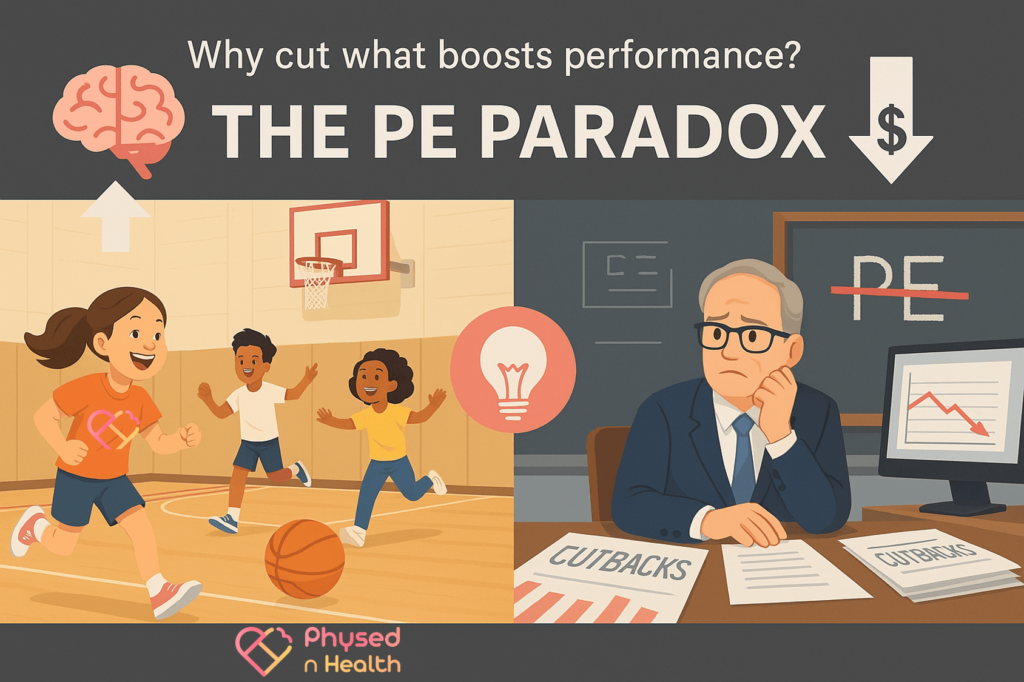
The decline of physical education (PE) in American schools presents a perplexing contradiction: as scientific evidence increasingly demonstrates the positive impact of physical activity on academic performance, schools continue to reduce or eliminate PE programs. This blog post examines why schools are cutting physical education despite the compelling research supporting its benefits, and explores the disconnect between scientific evidence and educational policy decisions. The Alarming Decline of Physical Education in American Schools Physical education programs have experienced a steady and concerning decline across American schools, particularly at the high school level. According to the 2022 US Report Card on Physical Activity For Children and Youth, only 26% of high school-aged students attend PE classes five days a week, while 52% attend just one day per week1. The percentage of schools requiring PE courses decreases dramatically from 97% in 6th grade to a mere 43% in 12th grade1. This downward trend continues throughout the high school experience, with PE enrollment declining steadily from 68.8% of 9th grade students attending at least one day per week to only 41.4% of 12th grade students1. By the time students reach ages 16-18, they receive an average of just 34 minutes of PE per week5. Perhaps most concerning is that only six states in the entire country require physical education for students across every grade level. The disparity in access to physical education is particularly pronounced in underserved communities, where budget cuts often hit hardest. This creates a significant educational and health equity issue, as children from low and middle-income households already face higher obesity rates compared to their peers from higher-income families4. Why Schools Are Cutting Physical Education: Unpacking the Motivations Several key factors drive the decisions to reduce or eliminate physical education programs: Budget Constraints Financial pressures on school districts have forced difficult choices about resource allocation. When facing limited budgets, administrators often view PE as a non-essential subject that can be reduced to preserve funding for core academic areas14. As one administrator noted in a research study, “Because of budget cuts, kids are only able to attend [PE] once a week or once every six-day cycle, depending on the school district”6. Academic Pressure and Standardized Testing The intense focus on academic achievement, particularly in subjects measured by standardized tests, has created an environment where PE is viewed as secondary to the school’s academic mission3. A survey by the Youth Sport Trust found that 38% of teachers reported that core subjects like English and Math had been given more time at the expense of PE5. One in three teachers cited exam pressures as the reason behind the decline in PE time5. Policy Pressures No Child Left Behind (NCLB) has significantly contributed to the devaluation of physical education by linking federal funding to schools’ adequate yearly progress in reading and mathematics3. According to the Center on Education Policy, since NCLB passed in 2002, 62% of elementary schools and 20% of middle schools have significantly increased instructional time for reading/language arts and math, with 44% of school districts cutting time in areas including physical education3. Administrative Constraints School administrators often recognize the value of physical education but feel constrained by policies beyond their control6. They face pressure to improve academic metrics while lacking the authority or resources to maintain robust PE programs. As one administrator stated, “To me, I think [PE] is very important… it is part of the whole child, and the whole education process. Because of budget cuts, kids are only able to attend it once a week”6. The Science Is Clear: Physical Activity Enhances Academic Performance The irony of cutting PE to improve academic outcomes is that research consistently shows physical activity either has no negative impact on academic performance or actually improves it. A comprehensive systematic review published in 2023 found that physical activity levels of 90 minutes or more per week were associated with improved academic performance2. The intensity of physical activity also matters: moderate to vigorous physical activity showed positive effects on academic indicators in 57.1% of studies that measured this relationship2. Even more compelling, 100% of studies examining high-intensity physical activity reported positive effects on at least one academic performance indicator2. The optimal duration appears to be 30-60 minutes per session, providing schools with practical guidelines for implementing effective PE programs2. Contrary to the assumption that PE takes away valuable academic time, studies demonstrate that increasing physical education instructional time does not harm academic performance and often enhances it3. One Australian study of 350 fifth-graders across seven schools increased PE time by 210 minutes per week for some students. After 14 weeks, there were no significant differences in math or reading skills between those who received additional PE and those who maintained the standard schedule3. This directly contradicts the assumption that cutting PE time will improve academic outcomes. The Administrator’s Dilemma: Valuing PE While Facing Reality School administrators often find themselves in a difficult position when it comes to physical education. Research indicates that many administrators personally value PE but struggle to prioritize it within institutional constraints6. A mixed-methods study examining administrators’ perceptions of physical education teacher evaluations revealed that administrators believe in the importance of PE. One administrator stated, “To me, I think it is very important. One, it is a state standard, and it is part of the whole child, and the whole education process”6. However, these same administrators acknowledged significant limitations in their ability to properly evaluate and support PE programs. Many felt they weren’t adequately trained in PE teacher evaluation and lacked knowledge about current curricular models and instructional strategies used within their schools6. This knowledge gap makes it difficult for administrators to advocate effectively for PE programs when faced with budget cuts or policy pressures. Additionally, many administrators operate under the principle that “good teaching is good teaching,” failing to recognize the unique aspects of physical education that require specialized knowledge and evaluation approaches6. This generalist perspective may inadvertently undermine the perceived value of PE as a distinct and essential subject area. Beyond Academics: The Broader Implications of Cutting PE The reduction of physical education programs